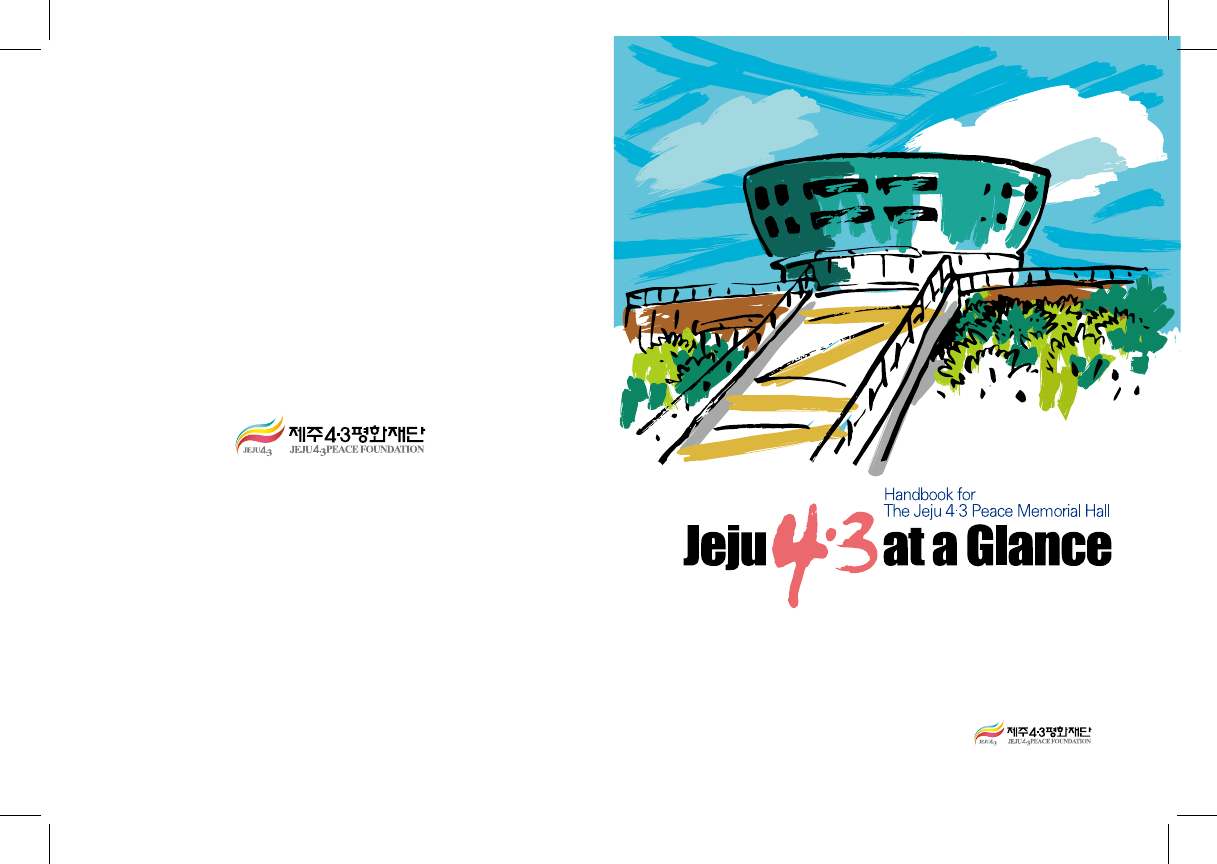
한눈에 보는 4.3 연문본 표지&에폭시판.pdf 1 2022. 1. 20. 오후 9:10
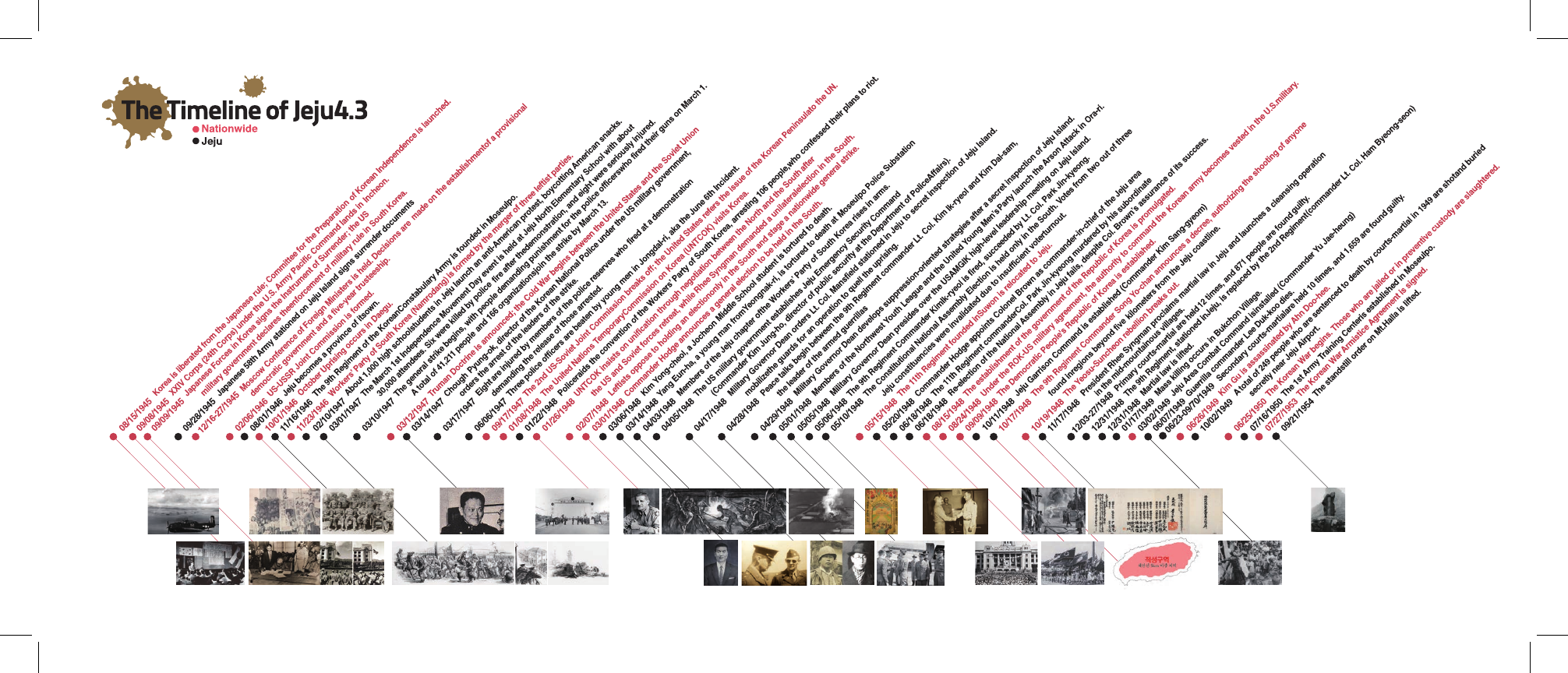
4.3연표 영문판(인쇄본).pdf 1 2022. 1. 20. 오후 5:14

Kim Seok-beom, author of Volcanic Island, an epic novel about the
Jeju April 3 Incident (hereinafter Jeju 4·3), said earlier, “There is no
history in the place where memories have been destroyed. Where there
is no history, there is no human. A human being who lost his or her
memory is no different from a corpse. For over half a century, Jeju 4·3
whose memory was obliterated did not exist in the history of Korea. It
was something that could not be spoken of, something that those who
knew shouldn’t be known. I call it the ‘suicide of memory.’ The terri-
fied people of Jeju themselves have destroyed their own memories of
the incident, driving them into oblivion.”
The Jeju 4·3 Peace Memorial Hall is an ark that prevents the “suicide
of memory” and serves as a “repository of historic memory.” Passing
down the intact memories of April 3rd is the true defense of the exis-
tential value of human beings.
한눈에 보는 4.3영문판본문(인쇄본).qxp_Layout 1 2022. 1. 20. 오후 9:01 페이지 1

Into the Cave of History
Facing Baekbi, a Blank Monument・5
A Faltering Island –Freedom and Frustration
Liberation, Striking the Island like Lightning・6
The US Military Government’s Administration Begins・6
Jeju, a Self-Governing Island・8
Shooting on March 1, the Incident that Triggered Jeju 4·3・10
People and the Government Fight Back through a General Strike ・11
The Beginning of the US Army Military Government’s Suppression・13
A Windy Island –Armed Insurrection and the Refusal to Division
April 3, 1948, “Uprising in Return for Oppression”・15
April 28 Peace Talks and the Arson Attack in Ora-ri ・17
The Only Rejected Ballots of the May 10 Election・18
Colonel Brown Is Appointed Commander-in-Chief・22
The June 23 Re-election Founders・23
A Burning Island – Scorched and Slaughtered
The Wind of Frenzy Sweeps the Island・25
Behind the Scorched Island Lies the US Military Leadership・27
People Taken to Mainland Prisons・34
Another Massacre Brought on by aWar・35
The Flowing Island – Aftereffects and the Movement forTruth
Unending Suffering, Tabooed History・37
Tough Path of Finding the Truth・38
Bringing Jeju 4·3 onto the Stage of History! The Enactment of the Special Act・39
Reborn as an Island of Peace
The President’s Apology and Designation of a National Memorial Day・41
Reconciliation Campaign, a Model for Historical Settlement・42
Justice Moving Forward! The Enactment of the Special Act・43
The Remaining Story・45
CONTENTS
한눈에 보는 4.3영문판본문(인쇄본).qxp_Layout 1 2022. 1. 20. 오후 9:01 페이지 2
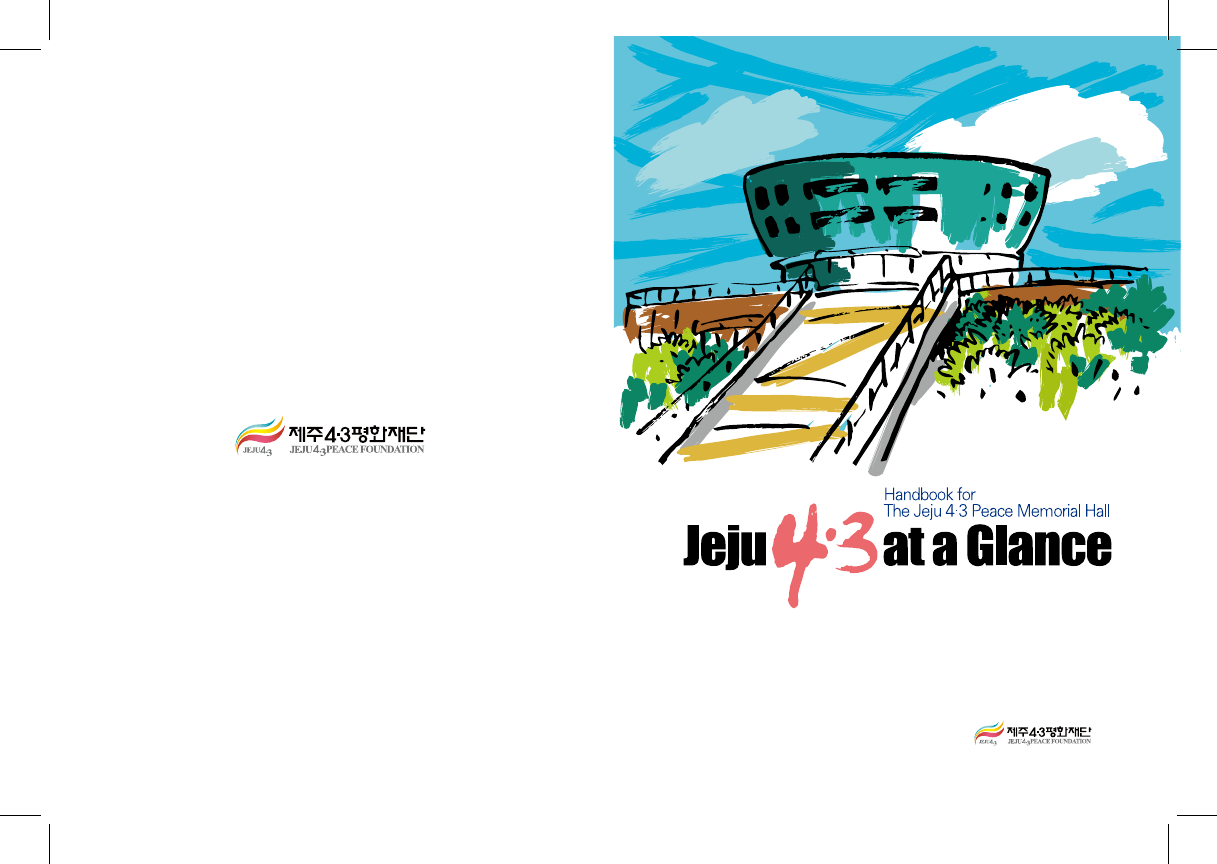
Handbook for
The Jeju 4·3 Peace Memorial Hall
한눈에 보는 4.3영문판본문(인쇄본).qxp_Layout 1 2022. 1. 20. 오후 9:01 페이지 3
4
Strolling through the Cave of History
Jeju is a beautiful island. It is the world’s only recipient of the UNESCO’s Triple
Crown in natural science, boasting of stunning and exceptional landscapes.
What lies behind the splendid scenery, however, is a history studded with
resentment and sorrow. About 70 years ago after Korea was finally liberated from
the Japanese rule, the people of Jeju went out of their way to prevent the division
of the country into North and South, and suffered a cruel tragedy. The truth about
the dreadful incident has been concealed for half a century as if it had never
happened. Surrounded by sea, the isolated island was once a huge prison and
massacre site, but it was also a forbidden island, where the truth of its history could
not be told for a long time afterward. Yet even under pressure, the Jeju people’s
struggle to reveal the truth continued. The Jeju 4·3 Peace Park, located in Bonggae-
dong, Jeju City, is the ultimate fruit of the struggle. The park's main facility, the
Jeju 4·3 Peace Memorial Hall, is in the shape of a bowl to symbolize the fact that it
contains the truth about Jeju 4·3 that has long been tabooed. A permanent exhi-
bition hall in the first basement has been designed to provide the history of Jeju 4·3
The Cave of History. It is thegateway into the history of Jeju 4·3.
한눈에 보는 4.3영문판본문(인쇄본).qxp_Layout 1 2022. 1. 20. 오후 9:01 페이지 4
5
at a glance.
Facing Baekbi, a Blank Monument
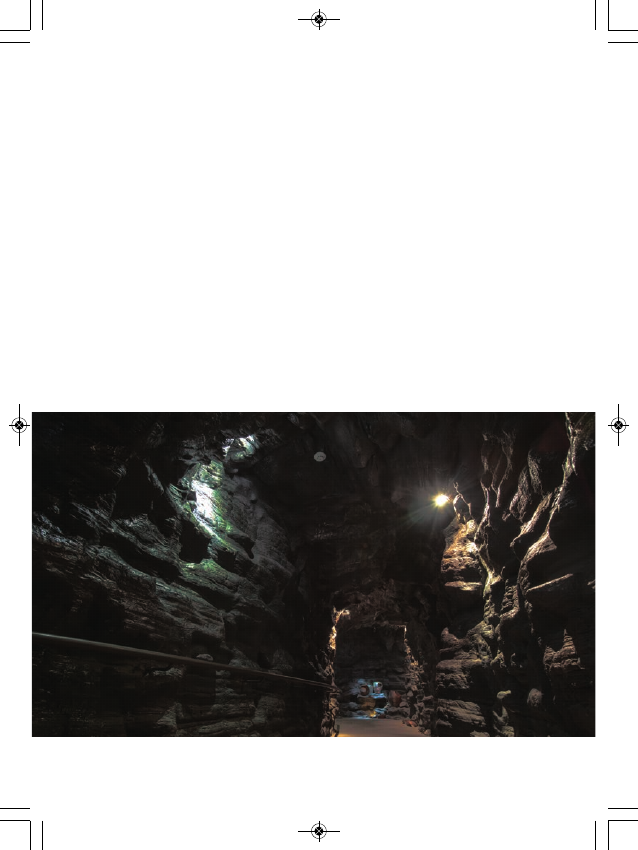
The first encounter with Jeju 4·3 begins in the cave of history. The long sloping
tunnel on the first floor is a reproduction of a lava cave, which can be spotted at
every turn around Jeju Island. As a volcanic island, Jeju has many caves. During
Jeju 4·3, many Jeju people climbed mountains or hid in caves, but they were
eventually found and killed by troops on punitive expeditions. Through this cave,
we delve into the history of Jeju 4·3, which occurred over seven decades ago.
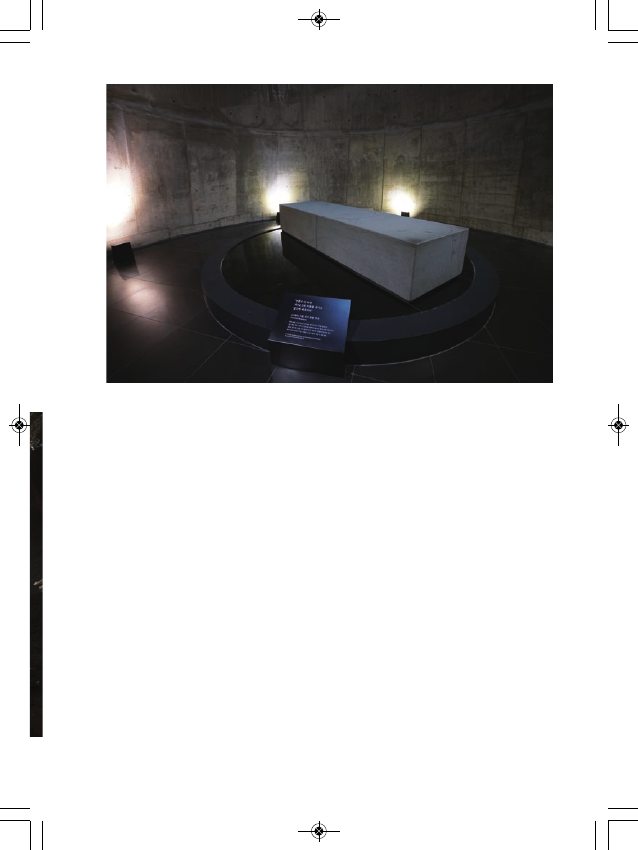
Past the tunnel, we come to Baekbi. It is a gravestone that has not been en-
graved. Baek in Korean can refer to the color white, but here it means empty.
Baekbi is a gravestone with no names. It is waiting for the rightful name that
clearly defines Jeju 4·3.
“Different words have been used to describe Jeju 4·3, such as ‘insurrection,
uprising, riot, event, and incident,’ none of which is the right historical name
for what happened. On the day the divided country becomes unified, when the
North and South become one, the true name for 4·3 will be engraved on the
stone.”
The Blank Monument. A monument awaiting its rightful name of Jeju 4·3.
한눈에 보는 4.3영문판본문(인쇄본).qxp_Layout 1 2022. 1. 20. 오후 9:01 페이지 5
A Faltering Island –Freedom and Frustration
Liberation, Striking the Island Like Lightning
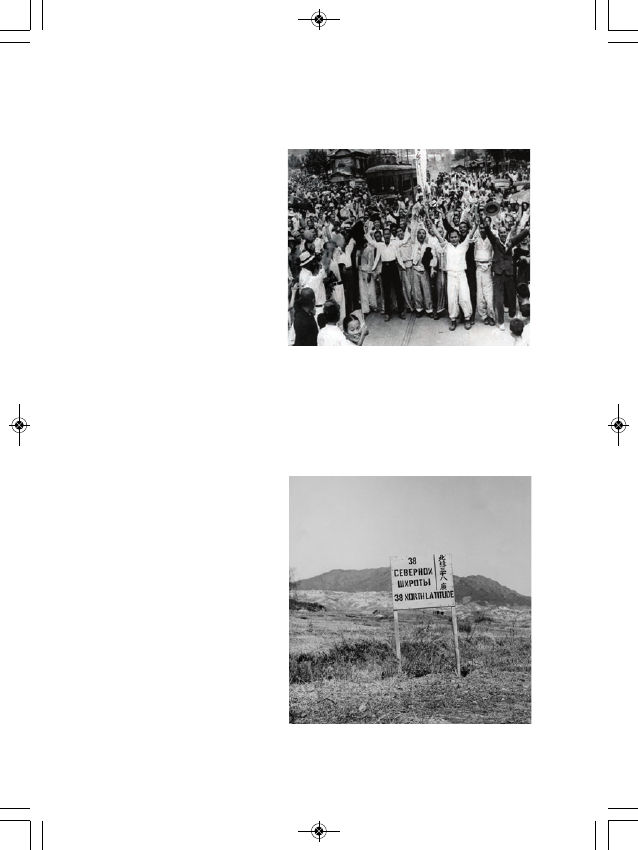
On August 15, 1945, liberation
arrived! Once Korea was freed
from the Japanese colonial rule,
there was a growing public desire
to build a better society and a self-
reliant, independent nation on the
Korean Peninsula. However, the
joy of liberation and the hope for a
new world came like a bolt of
lightning and vanished like a
transient dream. The day of
liberation was, ironically, also the
day the Korean Peninsula was
divided at the 38th parallel, which
caused much pain to the people of Korea.
Although the struggle for independence was strong both at home and abroad,
Korea’s liberation was the result of the Allies’ victory in World War II, which
enfeebled the nation's own right to make decisions. The unwanted division began
as the US and the Soviet armies
stationed themselves in the South
and the North, separated by the
38th parallel, under the pretext of
disarming the Japanese forces.
The US Military Govern-
ment’s Administration
Begins
On September 7, 1945, the US
military came to the Korean
Peninsula, announcing General
MacArthur's Proclamation No. 1,
which read, “…the victorious
military forces of my command
will today occupy the territory of
6
Thrill of Liberation Independence activists who were incar-
cerated in the Seodaemun Prison are shoutinghurrah as they
are released after liberation.
The 38th Parallel Division Thisline was drawn unilaterally by
the United States and the Soviet Union.
한눈에 보는 4.3영문판본문(인쇄본).qxp_Layout 1 2022. 1. 20. 오후 9:01 페이지 6
7
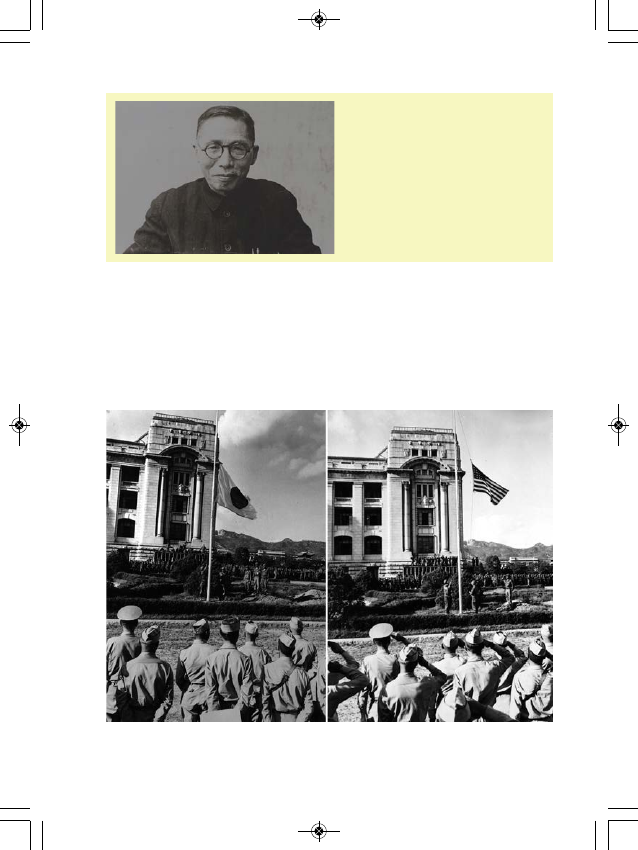
Korea south of 38 degrees north latitude.” On September 9, the Japan signed the
Instrument of Surrender in the Japanese General Government Building in Seoul,
and the Japanese flag was lowered. Yet what took its place was not Taegeukgi, the
Korean flag, but the Stars and Stripes. The Japanese army withdrew, and the US
troops had replaced them.
At the time of liberation, there were about 70,000 Japanese soldiers stationed in
“Everything that we've done toprepare for the
war for all those years through all sorts of
hardships andprivations has been in vain after
all....Now that the Japanese enemysurren-
dered before we executed any of those plans,
what a waste of effort wehave made to this
day! I am concerned about what might lie
ahead.”
- Kim Gu, from the Journal of Baekbum
Replacing the flag of theoccupying forces The flag of the defeated Japanese Empire is lowered and thatof
American troops stationed in Korea is hoisted up at the Japanese GeneralGovernment Building in Seoul.
한눈에 보는 4.3영문판본문(인쇄본).qxp_Layout 1 2022. 1. 20. 오후 9:01 페이지 7
8
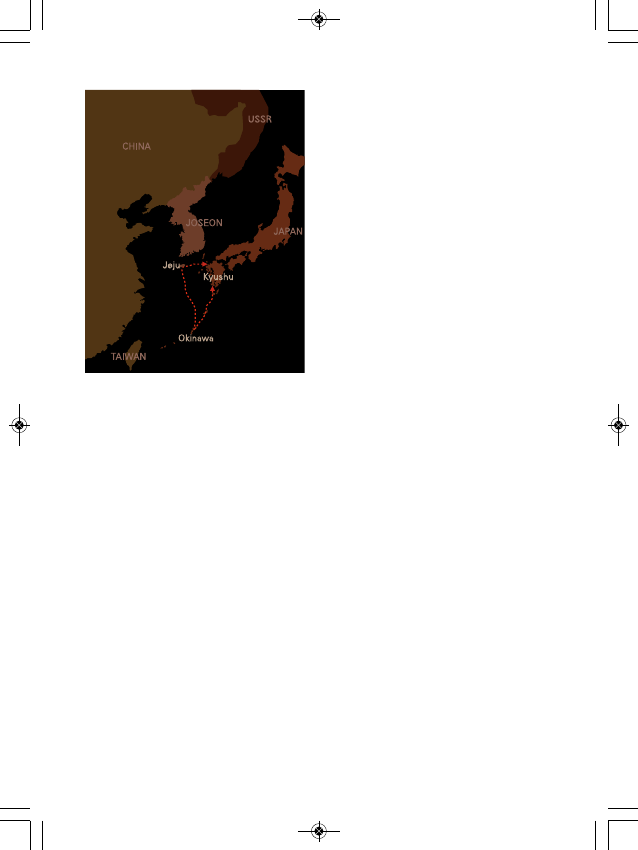
Jeju. In June 1945, when the island of
Okinawa fell to US forces with huge
casualties of over 200,000, including
120,000 civilians, the Japanese army
fortified Jeju Island with a large troop
as its last resort to prevent US troops
from landing on the Japanese
mainland. The Japanese army even
planned an operation to hide in the
dense forests of Mt. Halla and wage a
full-scale battle until the last minute, in
case the US forces were to land on the
island. But the war ended earlier, and
Jeju barely avoided a “second Battle of
Okinawa.”
On September 28, the US Army
held a separate signing ceremony for
Japanese surrender on Jeju Island. This
was because they noted the island's
military strategic value. On November 9, the 59th Military Government Company
(led by Major Thurman A. Stout, company commander), which was in charge of
the military administration, arrived on Jeju Island. The US Army Military
Government in Korea (USAMGIK) continued the colonial rule in South Korea,
and hired government officials and police officers who had served under the
Japanese rule. As a result, pro-Japanese collaborators once again gained the upper
hand, which unnerved the public.
Jeju, a Self-governing Island
After Korea’s liberation from the Japanese rule, a throng of young people from
Jeju who had been taken to Japan's factories and battlefields returned home. Over
60,000 youths, more than one-fourth of the entire population of Jeju, came home
during just one year. Those who had personally experienced ethnic discrimination
were eager to establish an independent nation.
Immediately upon their return, they engaged in self-governing and educational
activities. The movement for self-governance was expressed by the formation of a
preparation committee for the founding of a nation and the ensuing activities of the
People's Committee. The term “people’s committee” could be perceived as a leftist
Estimation of the US military’s route of attack
against Japan The US Army had formed a plan to oc-
cupy Jeju Island.
한눈에 보는 4.3영문판본문(인쇄본).qxp_Layout 1 2022. 1. 20. 오후 9:01 페이지 8
9
group nowadays, but that was
not the case in those days. It
had a much stronger influence
than the present-day resident
committees, and especially
the People’s Committee of
Jeju maintained a good
relationship with the US
Military Government
Company stationed in Jeju.
Under the slogan “We must
learn,” Jeju residents’
voluntary education movement spread like wildfire; towns and villages raced to
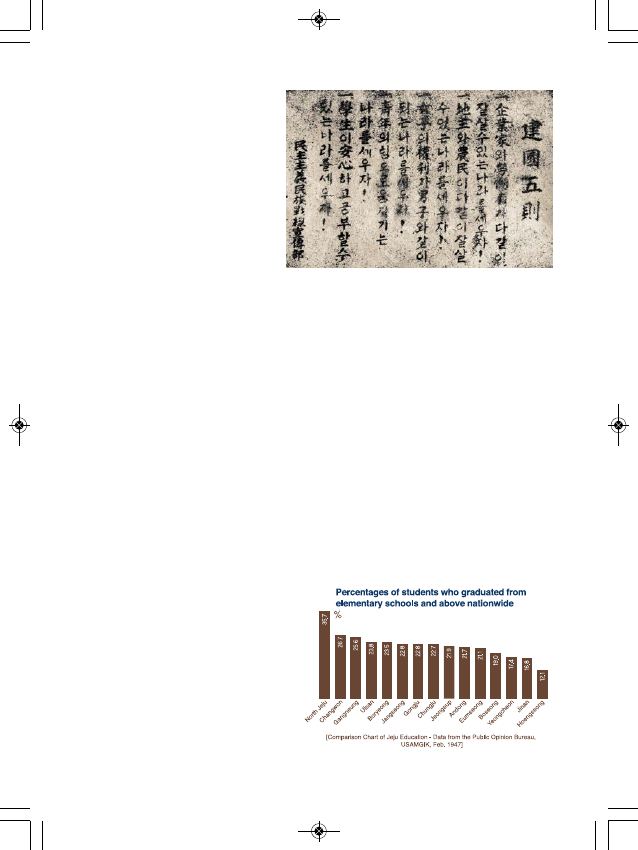
build schools. The US military government’s study on the education level of each
South Korean region conducted in 1947 showed that North Jeju County—present-
day Jeju City—surprisingly ranked first in the nation.
Japan had a big influence on this fervor for education. In the 1920s, heavy industry
began to grow in and around Osaka, requiring new workers. Japan launched a ferry that
regularly traveled between Jeju Island and Osaka, attracting 50,000 young adults and
middle aged people from Jeju to the Japanese labor market.
Having worked in Japan amidst all kinds of ethnic discrimination and hardships,
the people of Jeju realized the importance of education and brought their brothers
and sons to Japan for education. They harbored a strong will for independence and
grew into intellectuals, who later joined the anti-Japanese movement. After
liberation, these anti-Japanese activists led the People's Committee of Jeju, which
were supported by the public, engaging both rightists and leftists, except for those
who were conspicuously pro-Japanese. Unlike other central or regional commit-
tees, which had been led by the
leftists, the People’s Committee of
Jeju lasted the longest in the nation,
as it promoted moderate policies on
its own. However, its close
relationship with the US military
government began to crack in 1947
when the March 1st Independence
Movement Day shooting took
place.
The Democratic National Front’s Five Codes of the Founding of
a Nation
한눈에 보는 4.3영문판본문(인쇄본).qxp_Layout 1 2022. 1. 20. 오후 9:01 페이지 9
10
Shooting on March 1, the Incident that Triggered Jeju 4·3
The Special Act on Jeju 4·3
stipulates that Jeju 4·3 began with the
shooting on March 1, 1947. The
reason March 1, 1947, is considered
the starting point of Jeju 4·3 instead of
April 3, 1948, stems from the
recognition that the US military
government’s suppression, which
continued after the police’s shooting
at the March 1st Independence
Movement Day, was the main cause
of Jeju 4·3. The people of Korea
shouted hurrah at liberation in 1945,
but eventually realized that they
didn’t really have their country back
even after two years. Instead, what
they had was USAMGIK south of 38
degrees north latitude. The establish-
ment of a united, independent
government on the Korean Peninsula seemed to grow farther away, as signs of the
Cold War appeared between the United States and the Soviet Union. Hoping to
gain their country back in their own control, in 1947, people across the country
took to the streets on the March 1st Independence Movement Day to protest. The
whole nation was united under the slogan “Let's Achieve United Independence!”
Jeju Island was no exception. The 28th anniversary celebration of the Independ-
ence Movement Day was held at Jeju
North Elementary School, drawing a
crowd of some 30,000 people. People
were excited, saying, “this is the
largest crowd gathered in one place
since the dawn of Tamna (an old
name for Jeju).”
After the ceremony, some of the
young people began a street protest.
Around 2:45 p.m., as the protesters
passed the Gwandeokjeong Square
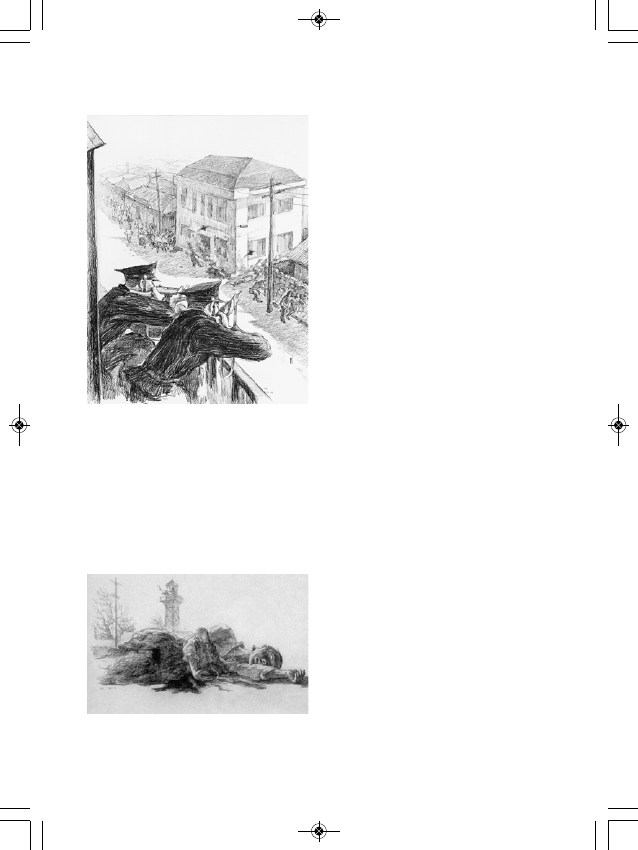
Shooting Kang Yobae. The police aiming at the crowd.
Murdered Kang Yobae. The death of a woman holding
her newborn baby.
한눈에 보는 4.3영문판본문(인쇄본).qxp_Layout 1 2022. 1. 20. 오후 9:01 페이지 10
11
where Jeju Police Station was located, a gunshot rang out. A child had been hit by
a mounted policeman, who nonetheless ignored the incident and tried to leave the
scene. Spectators who witnessed the accident protested against the policeman’s
actions by throwing stones at the mounted police, and immediately bullets flew
into the crowd.
The police fire killed six civilians, including a woman holding a baby, an
elementary school student, and a farmer in his 40s, and injured eight. The autopsy
results also confirmed that five of the six who died had bullets in their backs. The
police had fired indiscriminately at the fleeing crowd.
However, rather than apologizing for the incident, the US military government
and the police insisted that they had acted in self-defense and began to arrest the
leaders of the street demonstration. There were rumors that the people who were
taken were tortured. The anger of the people of Jeju was growing.
People and the Government Fight Back through a General Strike
The public outrage against USAMGIK and the police manifested as a general
strike. On March 10, 1947, a globally unprecedented general strike of the people
and government offices began. The strike started from Jeju Provincial Government
Office and spread to other government institutions including courthouses and the
prosecutors’ office, transportation companies, communication agencies, financial
institutions, and schools. Stores were closed. A total of 166 institutions and
organizations and 41,211 people were found to have participated in the strike. The
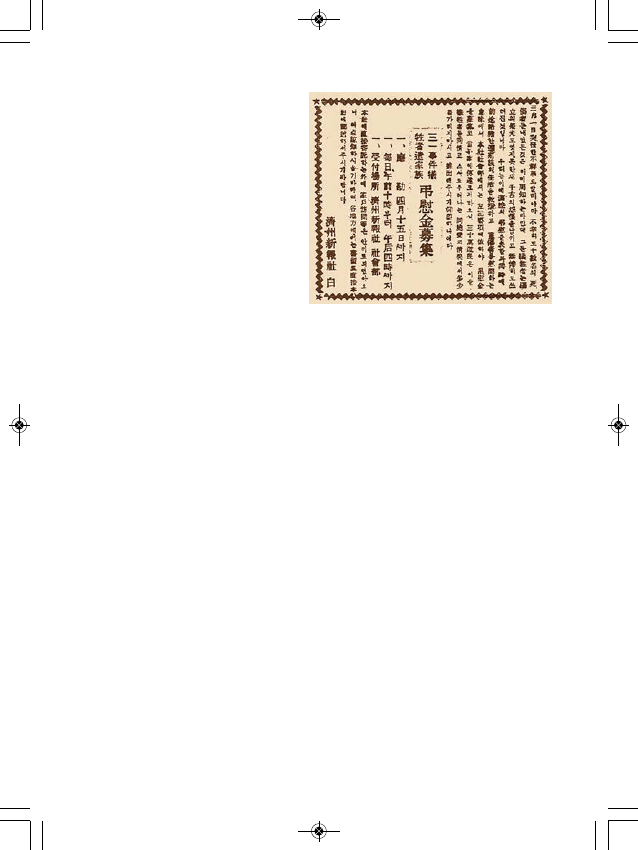
Jeju shinbo launched a fund raising campaign to help the bereaved families of the
victims of the March 1 shootings.
Even 66 police officers native to Jeju joined the strike. The shots had not fired
by the Jeju police but by the police reserves from mainland assigned to Jeju a week
earlier. The supporting squad, which was unfamiliar with the situation in Jeju, had
Those who were shot were spectators.” Gov. Park
Gyeong-hun’s account of the shootings
“It's true that the shooting incident occurred after the protesters
passed the police station and that the victims of the shooting
were spectators rather than protesters.”
- Independence News, April 5, 1947.
한눈에 보는 4.3영문판본문(인쇄본).qxp_Layout 1 2022. 1. 20. 오후 9:01 페이지 11
12
overreacted in the shooting due to their unstable psychological condition, and the
US military was aware of it.
The US military intelligence report described the police reserves as “those who
have long been unable to forget that their fellow police officers were brutally
assaulted by leftist mobs in the fall of 1946 (October Uprising in Daegu).” The
police squad in such unstable psychological state was dispatched to Jeju and ended
up causing a problem.
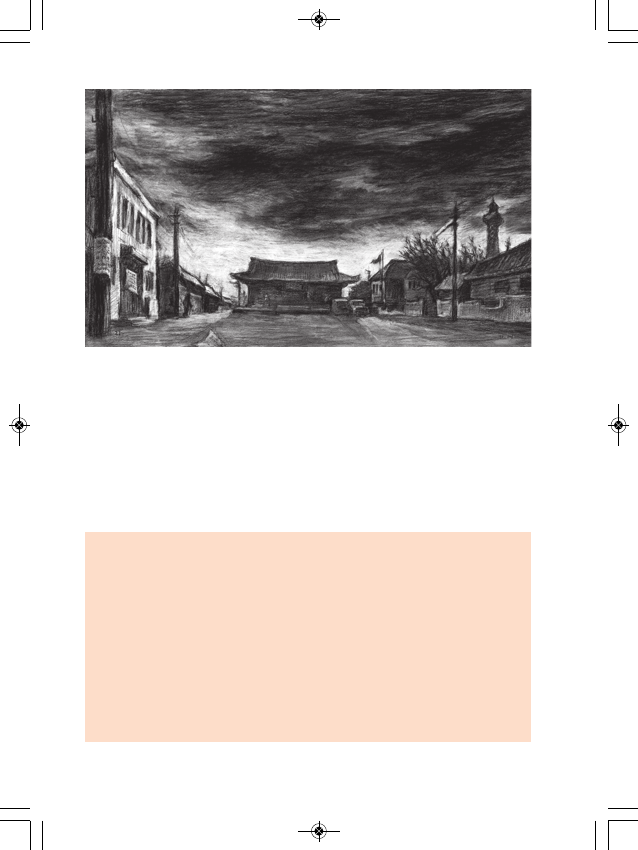
General Strike at Gwandeokjeong Square Kang Yobae.
Jeju Provincial Government Officials’ Demands
1) Immediately disarm the police and abolish torture to fully establish democratic
police.
2) Immediately punish those responsible for issuing the order to fire and the firing
officers.
3) The police chief executives must take responsibility and resign.
4) Secure livelihoods of the victims' families and the injured.
5) Do not arrest patriotic figures related to the March 1 incident.
6) Do not carry on the activities inherited from the Japanese police.
- Jeju shinbo, March 12, 1947.
한눈에 보는 4.3영문판본문(인쇄본).qxp_Layout 1 2022. 1. 20. 오후 9:01 페이지 12
13
The US military report also
noted that “both left and right
wing members are participating in
the general strike,” and analyzed
that “the residents’ animosity
triggered by the policeshooting
was intensified by the Jeju chapter
of the Workers’ Party of South
Korea (Namrodang).” Neverthe-
less, rather than trying to handle
the public unrest, the US military
government looked at the people
of Jeju with prejudice and distrust.
They began to see Jeju Island as
“Red Island.”
The Beginning of the US Army Military Government's Suppression
The US Armed Forces’ investigation team (led by Colonel James A. Casteel)
that came to the scene of the March 1 shootings was withdrawn. Instead, Chough
Pyung-ok, the chief of the Korean Department of Police Affairs under the US
military government, stepped to the fore on March 14. Upon arriving on Jeju with
a police reserve unit of 421 officers, he issued an order to apprehend the leaders of
the strike. At that time, Lee Gyeong-jin, deputy manager of the Department of
Police Affairs, declared that “90 percent of Jeju residents lean left,” driving the
situation into an ideological frame.
In just two days, 200 people were hauled into the police station. Within a year,
2,500 people were detained until just before Jeju 4·3 occurred in 1948. The US
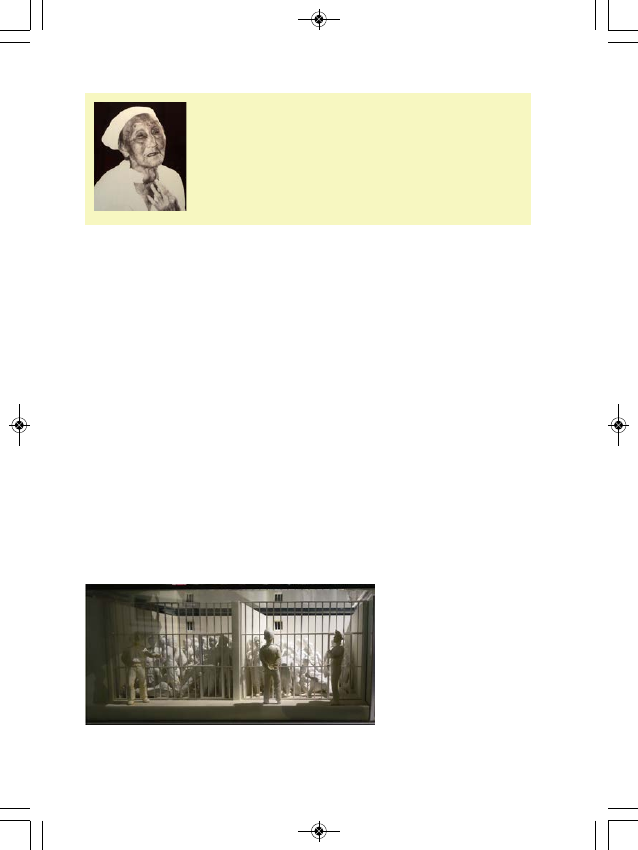
military inspection report recorded that 35 people were confined in a small jail cell
of 3.3 pyeong, or 11 square meters, due to a sweeping roundup. The prisoners
couldn’t even sit while jailed.
In the process of handling the incident, USAMGIK replaced executive officials,
including the Jeju military governor, the provincial governor, and the police chief,
with ultra-rightists. They set out to scour public offices and educational circles and
purge those who had taken part in the general strike. The 66 police officers who
joined the strike were also fired.
The members of the Northwest Youth League (NYL), a far-right paramilitary
youth organization, streamed into Jeju Island, using violence against Jeju residents
Fundraising announcement for thebereaved families of
the victims of the March 1 incident Jeju shinbo, March 10,
1947.
한눈에 보는 4.3영문판본문(인쇄본).qxp_Layout 1 2022. 1. 20. 오후 9:01 페이지 13
14
and began to take over the police, administrative offices, and educational institu-
tions. The NYL stirred up public sentiment by habitually terrorizing people under
the guise of “hunting communists.”
The new Jeju governor Yu Hae-jin, appointed by USAMGIK, was such a
blindly biased figure that the US military report described him as “an extreme
rightist.” When he arrived in Jeju, he brought seven members of the Northwest
Youth League with him as his guards.
By August 1947, the suppression of the US military government became even
more severe. From then, many young people left for mainland or Japan to avoid
arrest, and some found shelter in caves on Mt. Halla.
In March 1948, three cases of torture led to death, further arousing public
outrage. Kim Yong-cheol, a Jocheon Middle School student, and Yang Eun-ha, a
young man from a village of Youngnak-ri, Daejeong-myeon, were tortured to
death by the police. At the end of March, Park Haeng-gu from Geumneung-ri,
Hallim-myeon, was assaulted and shot to death by a NYL member.
In February 1948, the United Nation’s decision to hold elections in the regions
possible on the Korean Peninsula threw the whole country into commotion. This
was because it meant only South Korea would hold the election. South Korea
loudly voiced opposition
to the US military
government's policy to
hold general elections
only south of the 38th
parallel.
“We shall not have a
divided country,” shouted
the national leaders
including Kim Gu and
“My second son, daughter-in-law, and eldest son were all
arrested before my eyes. They all told me not to worry as they
were taken away but none of them came home. My throat still
bleeds whenever sorrow fills my heart. The entire incident is so
unjust that I can't close my eyes before I see my son again,
even if it takes hundreds of years. I can’ die.”
- Testimony of the late Yun Hee-cheon, mother of Yang Eun-ha
who was tortured to death.
Crowded jail A replica of thejail cell installed in the permanent exhibition
room of the Jeju 4·3 PeaceMemorial Hall.
한눈에 보는 4.3영문판본문(인쇄본).qxp_Layout 1 2022. 1. 20. 오후 9:01 페이지 14

15
Kim Gyu-sik. Twenty-six
police substations in North
Jeolla Province were attacked
on February 26, and ten in
South Jeolla Province on
March 1. This kind of unrest
spread to Gyeongsang
provinces. The public opinion
in Jeju also leaned against the
division.
A Windy Island—
Armed Insurrection and the Refusal to Division
April 3, 1948, “Uprising in Return for Oppression”
In the early morning of April 3, 1948, 350 guerrilla fighters of the Jeju chapter of
the Workers’ Party of South Korea launched an armed insurrection by attacking 12
police substations and right wing groups on Jeju Island.
They put up a slogan: “We resist oppression and oppose the May 10 election that
hampers the establishment of a unified country.”
Northwest Youth League Theirterrorist acts under the pretext of
the “communist hunt” was a factor in the outbreak of Jeju 4·3.
Armed Struggle. The decision was made by a 12 to 7 vote.
“As the oppression continued, 19 people, including the head of the Jeju chapter of the
Workers’ Partyof South Korea and the leaders of each myeon(township) branch,
gathered in Sinchon, Jocheon-myeon, in late February 1948 to hold a meeting to discuss
measures. Kim Dal-sam, the then-head of organizationin the Jeju chapter of the Workers’
Party, suggested an armed struggle. There was a heated debate between the cautious
members who said it was premature and the hawkish hardliners who wanted push
ahead withthe armed struggle. Eventually they decided to engage in armed struggle by
the vote of 12 to 7. “We originally targeted the bad police officers and the Northwest Youth
League, not the Korean constabulary army or the US military. It never occurred to us that
the US military would respond to our attacks or that the fight would be protracted. We
failed to grasp the situation clearly.”
- Testimony of Lee Sam-ryong(Tokyo, deceased), former political committee member of
the Jeju chapter of the Workers’ Partyof South Korea.
한눈에 보는 4.3영문판본문(인쇄본).qxp_Layout 1 2022. 1. 20. 오후 9:01 페이지 15
16
In the early stages of the struggle, USAMGIK regarded it as a “law and order
situation,” as it had experienced frequent armed protests on the mainland.
Therefore, it tried to send the police reserves back to Jeju Island to stop the armed
struggle. Five hundred members of the NYL were also dispatched. However, the
situation in Jeju worsened rather than improved.
On April 17, Military Governor Major General William F. Dean ordered
Lieutenant Colonel John Mansfield, commander of 59th Military Government
Company in Jeju, to deploy the soldiers of the Korean constabulary army in the
suppression operation. In
addition to the 9th Regiment
already stationed in Jeju, the
5th Regiment was dis-
patched from Busan. Two
US military reconnaissance
aircraft were sent to Jeju
Island.
Maj. Gen. Dean ordered Lt.
Col. Mansfield to take
command of all suppression
operations, while instructing
him to contact the guerrilla
leaders to negotiate.
Military governor Major GeneralDean (left) and Lieutenant Colo-
nel Mansfield, commander of the 59th MilitaryGovernment Com-
pany in Jeju
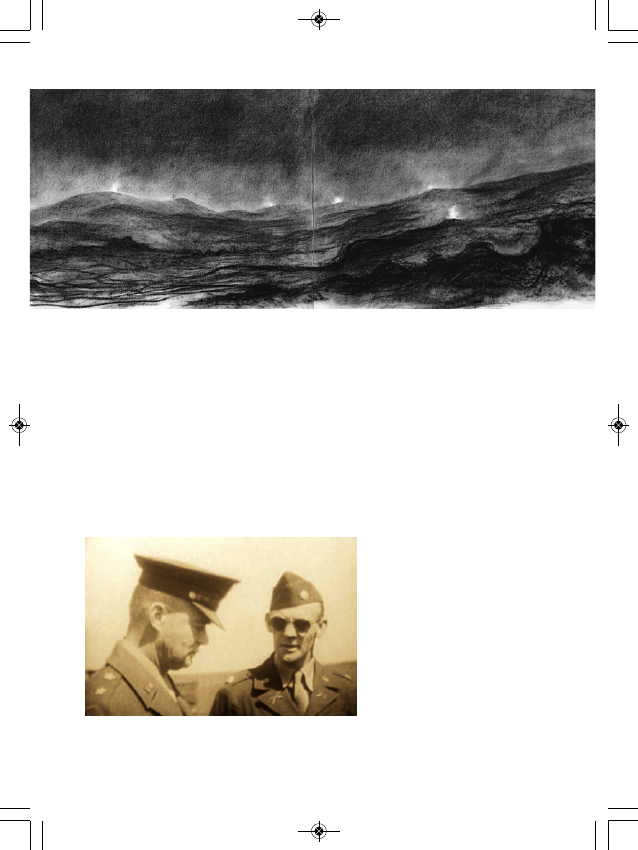
Beacon Fire Kang Yobae. An artwork representing the dawn of thearmed insurrection.
한눈에 보는 4.3영문판본문(인쇄본).qxp_Layout 1 2022. 1. 20. 오후 9:01 페이지 16
17
Accordingly, Mansfield instructed
Lieutenant Colonel Kim Ik-ryeol of
9th Regiment to contact the
guerrilla leaders.
April 28 Peace Talks and the
Arson Attack in Ora-ri
On April 22, Lt. Col. Kim Ik-
ryeol distributed leaflets suggesting
peace talks throughout Mt. Halla
from US military reconnaissance aircraft . Finally on April 28, Kim Ik-ryeol, met
with Kim Dal-sam, the leader of the armed guerrillas, in the mid-mountainous
region in Daejeong-myeon. Their negotiations made progress, with a promise that
the guerrilla fighters would disarm.
However, toward the end of April, there were looming signs of USAMGIK's
crackdown operation becoming tougher. On April 27, Colonel Rothwell Brown,
20th Regiment commander in Gwangju, and Lieutenant Colonel Marion W.
Schewe, operation staff of the 24th Army Corps, came to Jeju Island to review the
situation. On April 29, Military Governor Dean and Major General Orlando Ward,
the 6th Division commander, toured and inspected Jeju.
At such a fragile time, an arson attack occurred in Ora-ri, bringing the peace
process to a halt. On May 1, in broad daylight, unidentified young men broke in
Investigative Report on the Ora-ri Arson Attack
Our 4·3 Reporting Team traveled through the village of Ora-ri to find out the truth about
the arson incident. While interviewing about 30 residents, we finally got to meet one of
the arsonists named by the residents. He had been a member of the United Young
Men’s Party. He denied his involvement in the arson attack at first but eventually
confessed to it. He said that members of the Northwest Youth League and the United
Young Men’s Party went to Ora-ri on a police truck and set fire. Two days after the fires,
he was arrested by the 9th Regiment investigation team and was locked up in the
detention barrack in the regimental headquarters in Moseulpo. According to him, he was
released by Lieutenant General Park Jin-kyeong, the new commander of the 9th
Regiment who succeeded Lt. Col. Kim Ik-ryeol. He later became a police officer. It meant
that the arsonists who set the village on fire later became police officers and ferociously
participated in punitive search-and-destroy operations.
- Yang Jo-hun, an excerpt from April 3rd, In Search of Its Truth
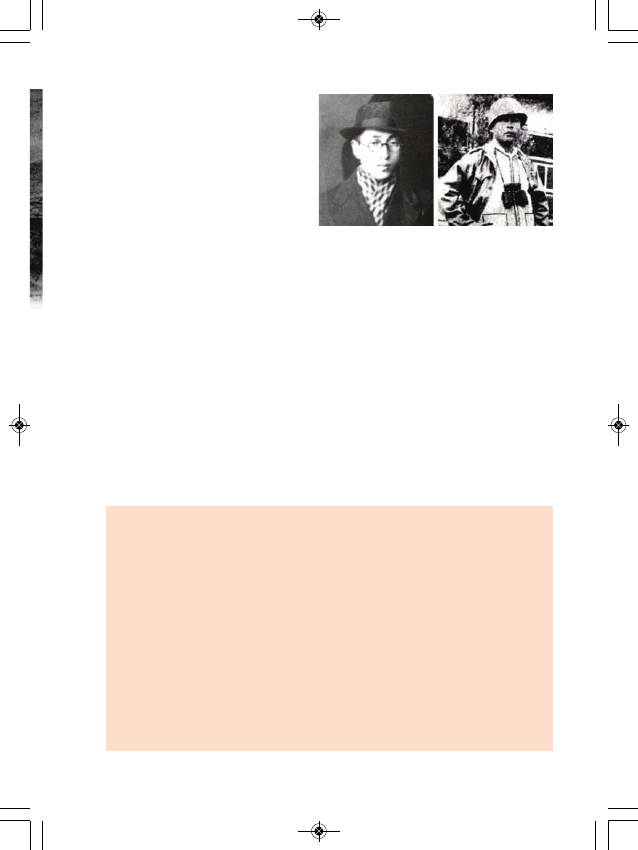
Kim Dal-sam and Kim Ik-ryeol(from the left). The key players
of the peace talks.
한눈에 보는 4.3영문판본문(인쇄본).qxp_Layout 1 2022. 1. 20. 오후 9:01 페이지 17
18
and set fires from house to house
in Ora-ri, which was close to
downtown Jeju-eup (present-day
Jeju City).
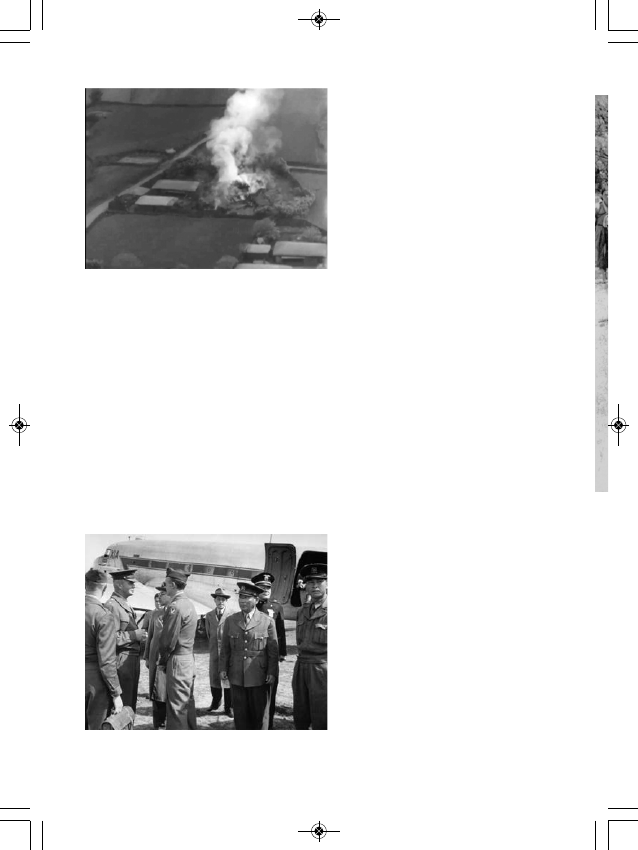
Two things about the incident
were suspect: the identities of the
young men who set the fires, and
the fact that the US Combat
Camera Team filmed the fires
from both air and ground as if they
were prepared for the incident,
and used the footage to make a
propaganda documentary film
titled May Day in Cheju-do.
Over the identity of arson suspects, Lt. Col. Kim Ik-ryeol and guerrilla leader
Kim Dal-sam argued that the arson attack was a premeditated ploy to impede the
peace talks,” while the US Army and the police claimed that it was the “handiwork
of rioters.” Unfortunately, the truth was buried in history.
Over 40 years after the incident, however, the arsonists were found to be the
members of the right wing youth group supported by the police, according to a
detailed investigation by the Jemin Ilbo's 4·3 Reporting Team. Then why on earth
did the US Armed Forces label the attack as the “handiwork of rioters” and even
make a movie out of it?
On May 3, two days after the arson attack, the US military government ordered
the Korean constabulary army to
“carry out a full-scale attack on
the armed guerrillas.” They chose
suppression by force instead of a
peaceful resolution.
The Only Rejected Ballots
of the May 10 Election
On May 5, 1948, Military
Governor Dean convened a secret
meeting with the military and
police leaders in Korea including
Ora-ri in Flames. It turned outto be an arson attack by
right-wing groups.
Military Governor Dean and theUSAMGIK leadership visit
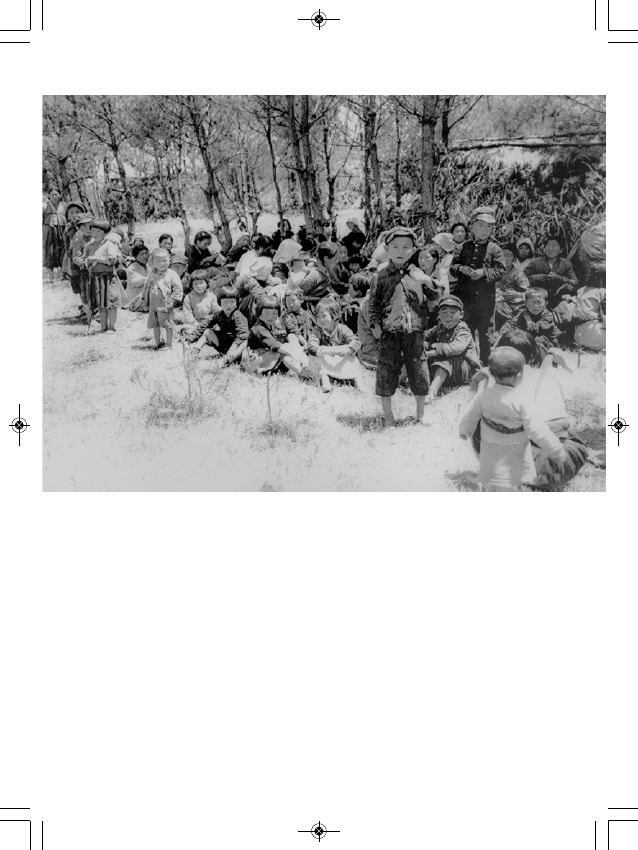
Jeju Island
한눈에 보는 4.3영문판본문(인쇄본).qxp_Layout 1 2022. 1. 20. 오후 9:01 페이지 18
19
Minister of Civil Affairs Ahn Jae-hong, Chief of the Department of Police Affairs
Chough Pyung-ok, and the Korean constabulary army commander Song Ho-
seong. A total of nine people attended the meeting, including Lt. Col. Mansfield,
59th Military Government Company commander in Jeju, Jeju Governor Yu Hae-
jin, 9th Regiment commander Lt. Col. Kim Ik-ryeol, Jeju Police Inspection Office
Director Choi Cheon, and Military Governor Dean's interpreter.
At the meeting, Chough Pyung-ok insisted on a hardline operation, arguing that
the April 3 incident was a premeditated international communist insurgency,.
However, Kim Ik-ryeol, analyzed that the increase in the number of those hiding
out in the mountains was due to the police failure, stressing that they need a more
moderate strategy combining suppression and pacification. Lt. Gen. Dean fired
Kim Ik-ryeol the next day, who had been working on a peaceful resolution, and
Residents running away to themountains A photo taken by the US military on May 15, 1948.
한눈에 보는 4.3영문판본문(인쇄본).qxp_Layout 1 2022. 1. 20. 오후 9:01 페이지 19
20
한눈에 보는 4.3영문판본문(인쇄본).qxp_Layout 1 2022. 1. 20. 오후 9:01 페이지 20
21
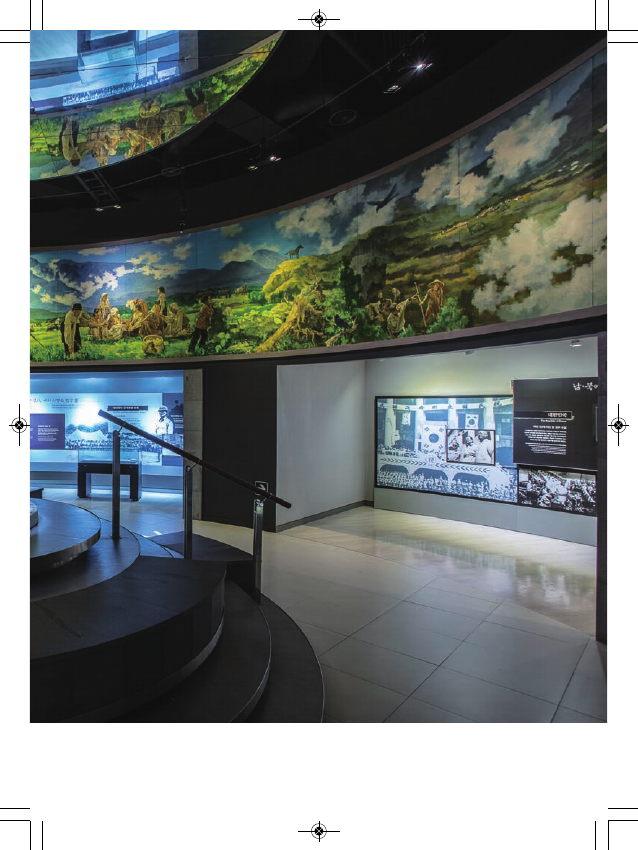
May 10 for Jeju Residents Kang Yobae. An artwork installed in the permanent exhibition room, Jeju 4·3 Peace
Memorial Hall.
한눈에 보는 4.3영문판본문(인쇄본).qxp_Layout 1 2022. 1. 20. 오후 9:01 페이지 21
22
appointed Lt. Col. Park Jin-kyeong, as Kim’s successor. It was a personnel move
for the hardline repression operation.
In the run-up to the election on May 10, 1948, which was only to be held in
South Korea, the entire nation was in a state of chaos. The situation on Jeju Island
was even more serious, as residents objected to the election and joined the
guerrillas in the mountains, and election officials resigned. USAMGIK actively
urged its staff to manage the election by dispatching US military officers to carry
ballot boxes from Seoul to Jeju Island.
The electoral system in those days validated votes only when the polling rate
exceeded 50 percent. However, the voter turnouts in Jeju fell short of the require-
ment, with only 43 percent voter turnout in North Jeju-gun District A and 46.5
percent in North Jeju-gun District B. In other words, the ballots from these two
Jeju districts, out of 200 districts nationwide, were invalidated. In the end, Jeju
became the only area in South Korea that refused the May 10 election arranged by
USAMGIK.
Colonel Brown Is Appointed Commander-in-Chief
Shocked by the election results, the US military government launched full-scale
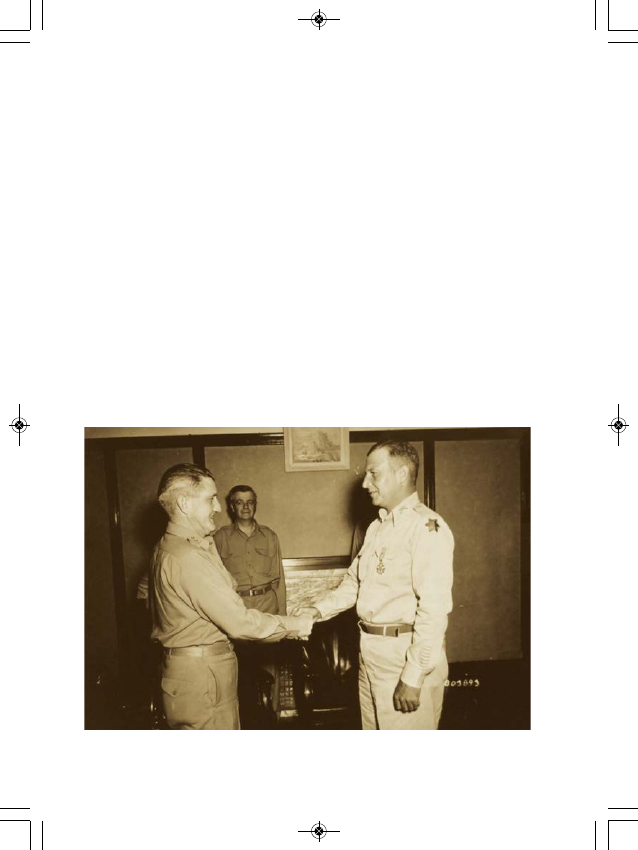
Lt. Gen. John R. Hodge and Col. Brown,who was appointed the commander-in-chief of Jeju
한눈에 보는 4.3영문판본문(인쇄본).qxp_Layout 1 2022. 1. 20. 오후 9:01 페이지 22
23
countermeasures. The
military destroyer USS Craig
was deployed to the coast of
Jeju, and the size of the
Korean constabulary army
and the police forces were
greatly expanded. The 11th
Regiment established in
Suwon, was sent to Jeju on
May 15. A battalion of the
6th Regiment in Daegu was
sent back to Jeju Island. On
May 18, 450 police reserve officers were also dispatched.
Lt. Gen. Hodge, the commander of the US armed forces in Korea, appointed
Col. Brown, the commander of the Gwangju combat unit, as the commander-in-
chief of Jeju on May 20. It was unprecedented to send a high-ranking US military
officer as a combat commander in order to prevent unrest in the area under the US
military rule. Brown had the authority to command and control all forces stationed
in Jeju including the Korean constabulary army, the coast guard, and the police as
well as US military advisors.
In the meantime, much concern was being voiced in Seoul and other regions
about the situation in Jeju. “Public rage erupted because of the suppression,
therefore handling the cause should come first.” These statements were issued by
all levels of society, but Brown took no heed of the public opinion. Rather, he held
a press conference and said, “I believe the situation will be subjugated in about two
weeks if things go as I planned.” Brown showed a hardline stance, adding, “I'm not
interested in the cause. My mission is to quell it.”
The US military government announced that Jeju Island would carry out a re-
election of the Constitutional Assembly legislators on June 23, 1948. Commodore
Roberts, advisor for the Department of Internal Security, also came to Jeju to push
forward the suppression operation. To enforce the re-election, Brown carried out
the “operation sweeping all the way from the west to the east of Jeju Island” that
he had avowed.
The June 23 Re-election Founders
Col. Brown's indiscriminate sweep operation resulted in severe adverse effects,
as he rounded up young people ostensibly for obstructing the election, regardless
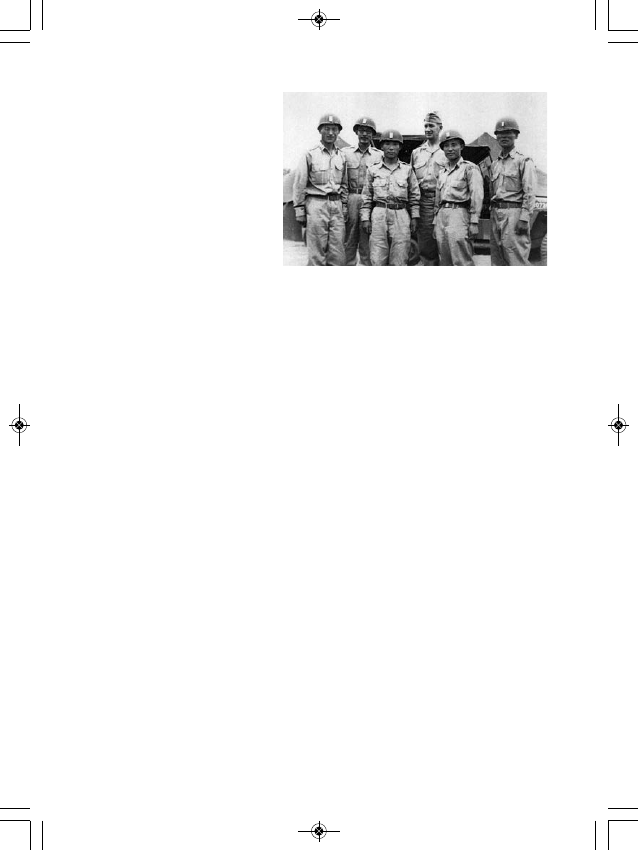
Commodore William M. Roberts, advisorfor the Department of
Internal Security, and the Korean constabulary army officials
한눈에 보는 4.3영문판본문(인쇄본).qxp_Layout 1 2022. 1. 20. 오후 9:01 페이지 23
24
of whether they were guilty or not. In response, every village posted a lookout. The
lookouts sent a signal whenever soldiers or police officers approached, allowing
the young men of the village to run for dear life. Those who were caught were
taken away. The Department of Internal Security announced that the sweep
operation brought in 3,126 people by May 27, 1948. Yet the firearms that they had
seized were only three Japanese type-99 rifles.
The US military report released shortly after recorded that the number of arrests
from May 22 to May 30 amounted to over 5,000. A newspaper issued on June 12
read, “About 6,000 people have been arrested by the police and the constabulary
army,” indicating the number was on the rise.
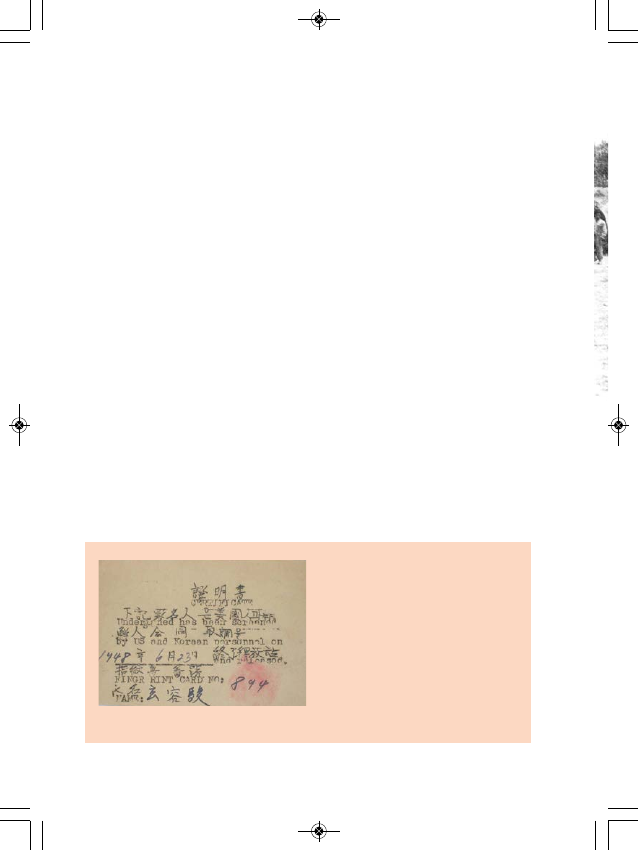
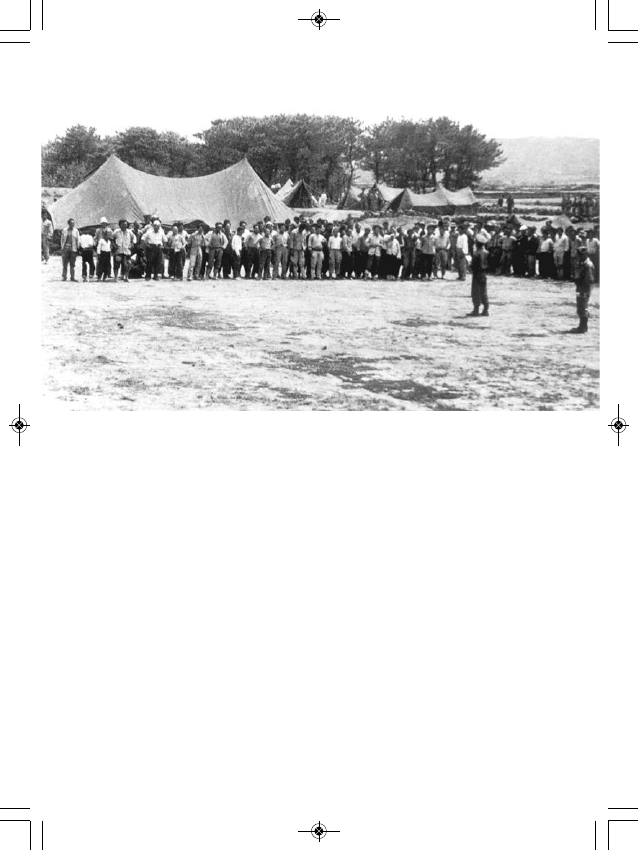
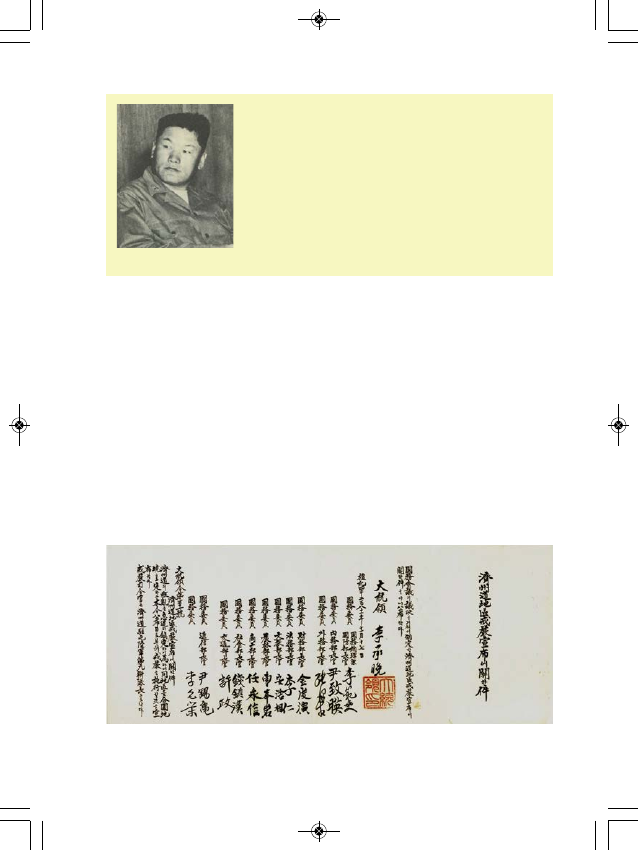
Those arrested were placed in a tent temporarily set up on the grounds of Jeju
Agricultural School. The following certificate of release clearly shows the utter
recklessness of this arrest operation.
Regiment Commander Park Jin-kyeong faithfully carried out Col. Brown's
instructions for reckless arrests. As a result, he was promoted to colonel just one
month after he was appointed to the post. Then in the early morning of June 18,
1948, Park Jin-kyeong was shot and killed by a subordinate while he was asleep in
his apartment after the promotion celebration. Everyone was shocked.
The June 23 re-election also failed despite the vigorous operation of USAM-
GIK. To the US military government, which had pushed for the election in South
Korea, Jeju was an eyesore that rejected the US policy for the Korean Peninsula to
the bitter end.
When the election held in South Korea was boycotted on Jeju, US military
commanders in South Korea became infuriated. A New York Times article
Certificate of release for a
second-year middle school
student. It reads,
“The undersigned has been screened by
US and Korean personnel on June 23,
1948, and released.” It also says that this
student was the 894th release after the
June 23rd re-election foundered. The
absurdity of this release certificate lies in
the fact that Hyeon Yong-jun, the one
that isbeing released, was only a second-year student at Ohyun Middle School.
한눈에 보는 4.3영문판본문(인쇄본).qxp_Layout 1 2022. 1. 20. 오후 9:01 페이지 24
25
reporting on the sweeping operation against the island residents gave the world a
glimpse of what had happened. A crucial factor in the forthcoming bloodshed can
be found here, and at the core was the scorched-earth operation.
A Burning Island─Scorched and Slaughtered
Wind of Frenzy Sweeps the Island
The government of the Republic of Korea was born on August 15, 1948. On
September 9, the North Korean regime named the Democratic People's Republic
of Korea was also promulgated. Failing to achieve the historic task of establishing
a unified nation, the North and the South each formed its own separate govern-
ment, which solidified the division of the Korean Peninsula. The newly established
Rhee Syngman administration disapproved the situation on Jeju Island, thinking
that it was an obstacle to its legitimacy. On August 24, under the South Korea-US
military safety provisional agreement, the US armed forces in Korea, which had
the operational control of the South Korean military, also urged the government to
Jeju residents detained at thetent camp at Jeju Agricultural School
한눈에 보는 4.3영문판본문(인쇄본).qxp_Layout 1 2022. 1. 20. 오후 9:01 페이지 25
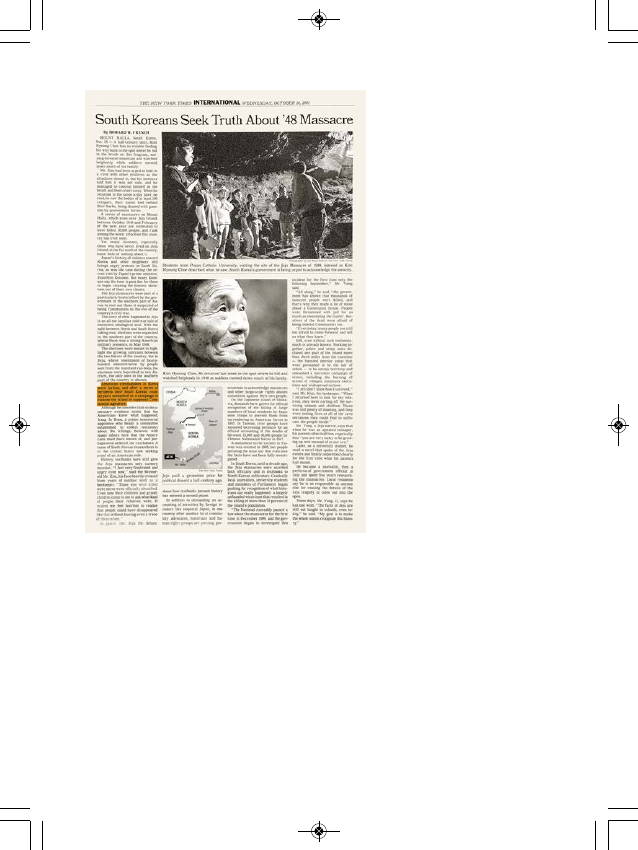
Jeju 4·3 covered by The New York
Times
On October 24, 2001, The New York
Times published an article entitled
“South Koreans Seek Truth About ’48
Massacre,” shortly after the South
Korean government undertook the in-
vestigation into Jeju 4·3 after theSpe-
cial Act was enacted. The Times
reported that when the election in
South Korea on May 10, 1948, was
boycottedonly on Jeju Island, “Ameri-
can commanders in Korea were furi-
ous, and after a series of incidents
their South Korean counterparts em-
barked on a campaign to cleanse the
island of supposed Communist agita-
tors.”
end the unrest in Jeju as
soon as possible.
The Jeju 4·3 massacre
was forewarned as Song
Yo-chan, commander of
Korea’s 9th Regiment,
followed the highest command and issued a declaration that anyone passing the
mid-mountainous regions beyond five kilometers from the coastline would be
deemed as an insurgent and shot to death on the spot. Topographically, Jeju had
more than 100 villages in the mid-mountainous regions over five kilometers away
from the coastline, with a population of tens of thousands. In this vast area,
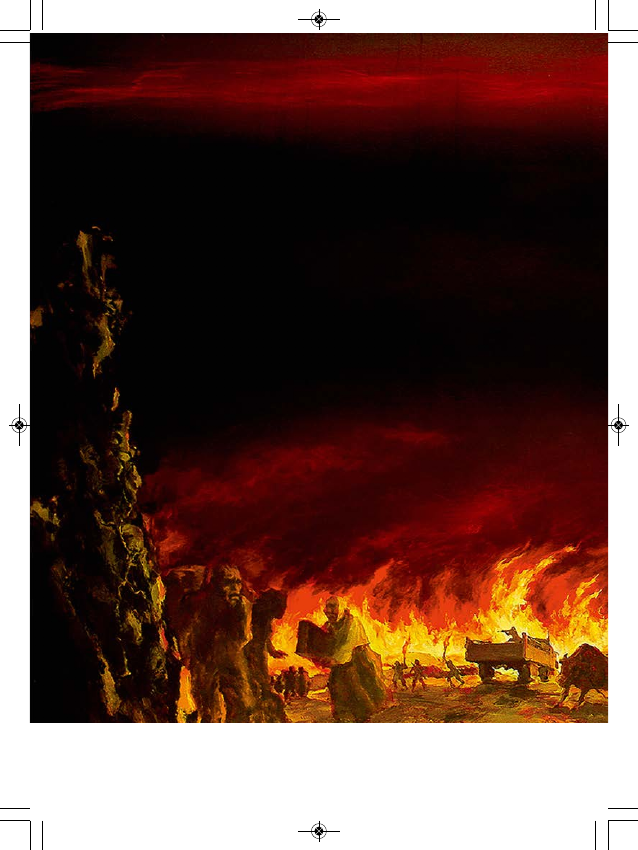
accounting for 80 percent of the total land area of Jeju Island, a “scorched-earth
operation,” which had been prohibited by international law, was executed. Mass
shootings of unarmed civilians of all ages were carried out. Cattle, horses, pigs and
other animals were also slaughtered for fear they would be food for the rioters.
About 40,000 houses in the mid-mountainous villages were burned by the punitive
forces. Literally, the whole island of Jeju was engulfed in flames.
26
한눈에 보는 4.3영문판본문(인쇄본).qxp_Layout 1 2022. 1. 20. 오후 9:01 페이지 26
27
On October 19, some members of the 14th Regiment in Yeosu, which was
ordered to go to Jeju Island, rebelled, saying, “We cannot kill fellow Koreans.” The
Yeosu-Suncheon rebellion, coupled with the martial law issued on Jeju Island on
November 17, added fuel to the massacre in Jeju. Martial law was declared when
there was no legislation on martial law.
The US military report recorded that the 9th Regiment “adopted a plan for the
mass slaughter of villagers under the assumption that all the residents of the remote
villages in the mid-mountainous regions are clearly providing assistance and
convenience to the partisan units.”
Behind the Scorched Island Lies the US Military Leadership
The cleansing operation in Jeju was carried out by the South Korean military,
The declaration of Regiment CommanderSong Yo-chan
-“The armed forces declared aprohibition of unauthorized
passage in the mountainous areas and areas beyondfive
kilometers from the coastline during the military action after
October 20in order to wipe out unpatriotic extremists who
lurk around Mt. Halla and carryout unpardonable atrocities
against people. Anyone who violates this declarationwill be
recognized as an insurgent and shot to death regardless of
the reason.”
- Chosun Ilbo, Oct. 20, 1948.
President Rhee Syngman's declarationof martial law on Jeju Island (Nov. 17. 1948).
한눈에 보는 4.3영문판본문(인쇄본).qxp_Layout 1 2022. 1. 20. 오후 9:01 페이지 27
28
한눈에 보는 4.3영문판본문(인쇄본).qxp_Layout 1 2022. 1. 20. 오후 9:01 페이지 28
29
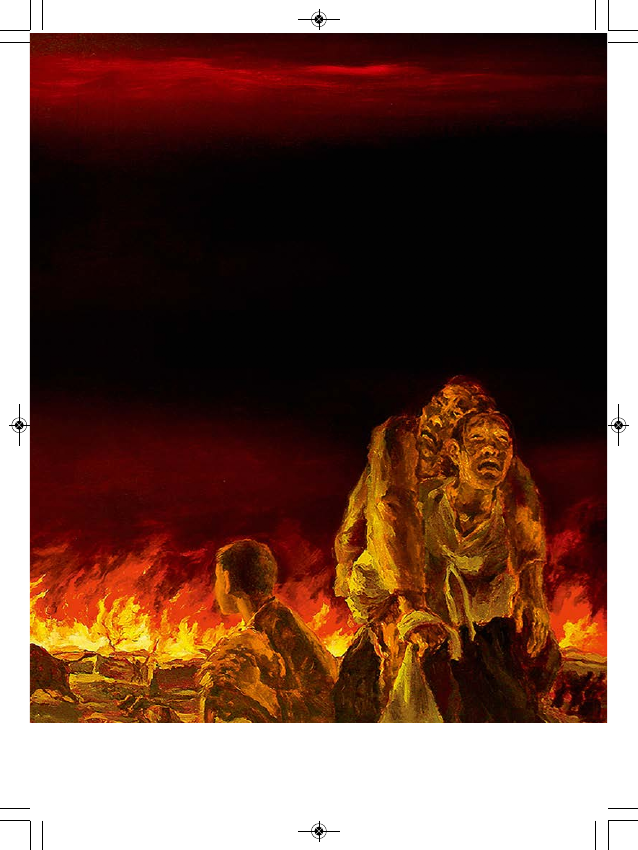
Heaven’s Cry Kang Yobae. An artwork that represents the hellish scene of people forced to leave their vil-
lage set on fire during the scorched-earth operation.
한눈에 보는 4.3영문판본문(인쇄본).qxp_Layout 1 2022. 1. 20. 오후 9:01 페이지 29
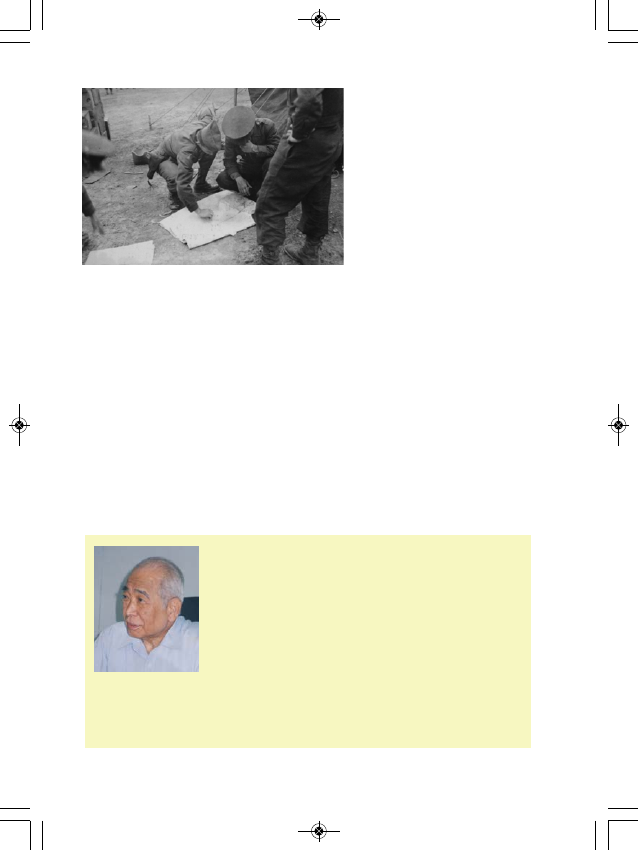
30
but behind them was the US
military leadership. The most
prominent figure was Commo-
dore Roberts, who took office
as the head of the US Army
Forces in Korea’s provisional
military advisory group in
Korea after the South Korea-
US agreement was signed in
August 1948. Roberts was
given operational control over
the police as well as the South
Korean military.
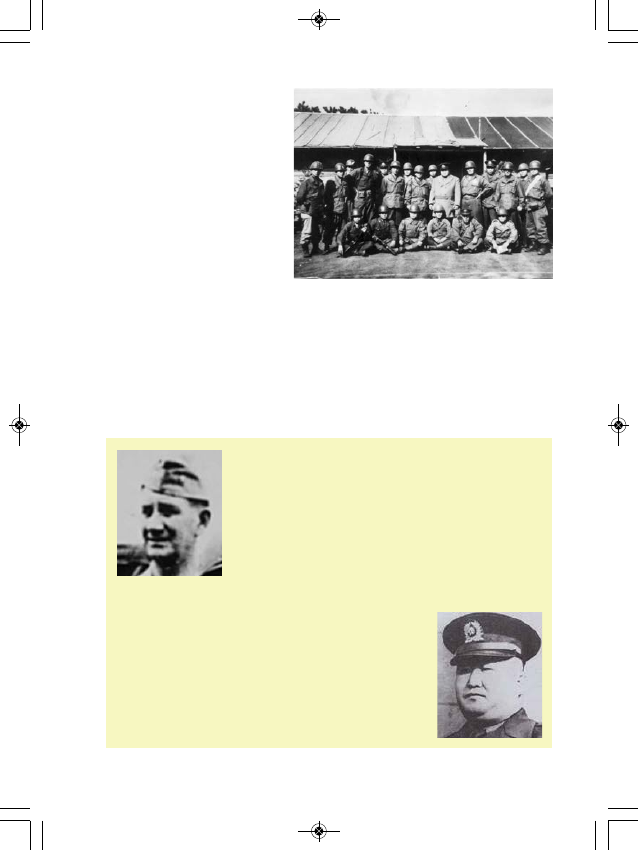
Chief Advisory Officer Roberts ordered the 5th Brigade advisor Captain
Treadwell in Gwangju on October 9, 1948, that an immediate modification of the
operation was needed in Jeju. After the directive was issued, the Jeju Garrison
Command was established on October 11, followed by Commander Song Yo-
chan’s declaration on October 17.
In June of that year, it was Roberts who recommended Major Song Yo-chan to
be the 11th Regiment commander in Jeju. He praised Song as “a strong and brave
man and the best officer we have.” The US Army Forces in Korea provided the
necessary weapons and equipment for the suppression operation which was carried
out on Jeju Island. Even after the South Korean government was established, the
US military advisor’s approval was required to issue any weapons or equipment.
Testimony of the military logistics manager of
the 9th Regiment
“I worked with the director of logistics, Lieutenant Colonel
Acton Kim, and the advisor, Major Marsh. Lt. Col. Kim didn't
have the authority, and only when the advisor signed would
weapons and equipment be issued. Once equipment was
issued, it was shipped from Incheon to Mokpo, sometimes by
boat and sometimes by train. Then it was finally delivered to
Jeju. It was the same even after the South Korean govern-
ment was established.”
- Testimony of Kim Jeong-mu (discharged Brigadier General), logistics
manager of the 9th Regiment
The US military advisor takingoperational control. Captain
Lerch is consulting with a guard officer.
한눈에 보는 4.3영문판본문(인쇄본).qxp_Layout 1 2022. 1. 20. 오후 9:01 페이지 30
31
President Rhee Syngman's
directives also show how much
the US military was interested
in the operation on Jeju Island.
It is worth noting that at a
Cabinet meeting on January 21,
1949, President Rhee ordered
to “mercilessly crackdown on
the situation on Jeju Island,”
adding that the suppressive
measure was an aggressive
effort to attract the US aid.”
Roberts sent an official letter to
the Korean defense minister
and the chief of staff on December 18, 1948, amidst the brutal cleansing operation
on Jeju Island. In the letter, he wrote, “Commander Song has exerted remarkable
command abilities. Please issue a presidential statement to publicize this.” In three
days, Chief of Staff Chae Pyong-dok replied to this letter, saying “We promise to
confer a medal on Song.”
Letter from Chief Advisory Officer Roberts to
the Korean Defense Minister, etc.
“Colonel Song Yo-chan has exercised a great command to
transform the island’s initially hostile attitude into friendly and
cooperative. Such facts should be widely known to the public
by newspapers, broadcasts, and a presidential statement.”
- US National Archives and Records Administration, RG 554: Military Oper-
ation Orders (12/18/1948).
The reply of Chief of Staff Chae Pyong-dok
“Lieutenant-Colonel Song Yo-chan and the US-Advisor have
shown great ability on Jeju Island. I will recommend President
Rhee to issue a presidential statement based on your
proposal. I pledge to confer a proper medal on Lt. Col. Song.”
- US National Archives and Records Administration, RG 554: - Military Op-
eration Orders (12/21/1948).
Chief of Staff Chae Pyong-dok andcompany on tour inspec-
tion of Jeju Island
한눈에 보는 4.3영문판본문(인쇄본).qxp_Layout 1 2022. 1. 20. 오후 9:01 페이지 31
32
한눈에 보는 4.3영문판본문(인쇄본).qxp_Layout 1 2022. 1. 20. 오후 9:01 페이지 32
33
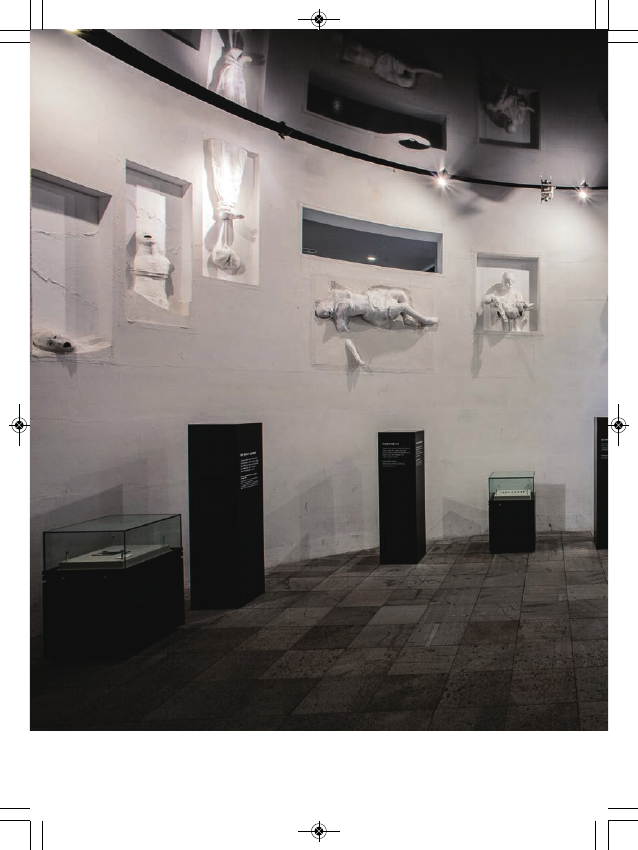
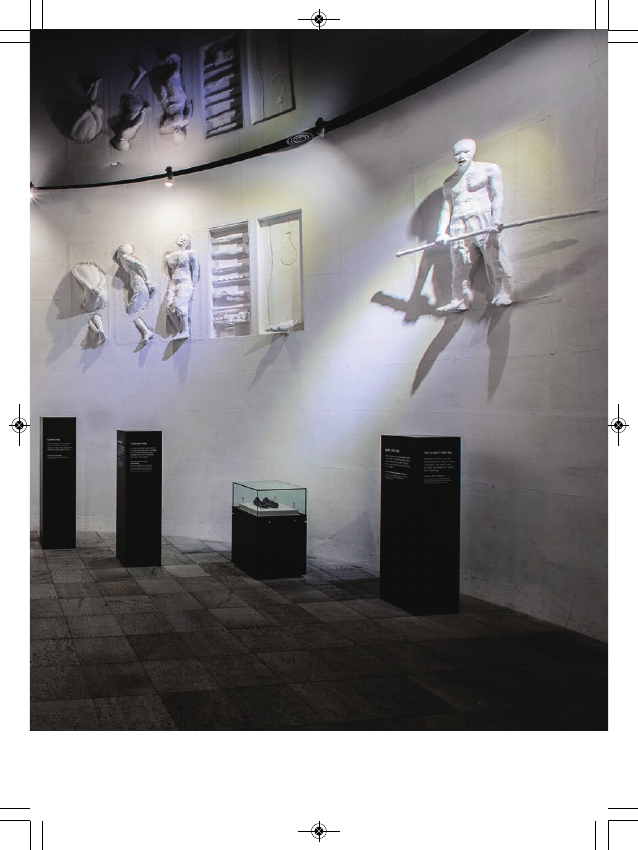
Types of Slaughter Koh Gil-chun. A sculpture that represents different types of death at the time of Jeju 4·3
(in the permanent exhibition hall of the Jeju 4·3 Peace Memorial Hall)
한눈에 보는 4.3영문판본문(인쇄본).qxp_Layout 1 2022. 1. 20. 오후 9:01 페이지 33
People Taken to Main-
land Prisons
At the end of December
1948, the 2nd Regiment
replaced the 9th Regiment as
the Jeju suppression unit. Lt.
Col. Ham Byeong-seon, the
2nd Regiment commander,
had served as a warrant officer
of the Korean volunteers in
the Imperial Japanese Army,
as was Lt. Col. Song Yo-chan,
the 9th Regiment commander who was promoted for his contribution to the
crackdown. The 2nd Regiment had quelled the Yeosu-Suncheon rebellion, and the
3rd Battalion, in particular, was comprised of members of Northwest Youth
League, who detested communists. Ham Byeong-seon also launched a severe
crackdown operation. It was around this time that nearly 400 residents of the
village of Bukchon-ri was massacred. The situation in Jeju remained volatile,
however.
In March 1949, the Jeju Area Combat Command was established, and Colonel
Yu Jae-hung was appointed as commander. On Mt. Halla, there were over 10,000
refugees shivering from cold and hunger.
Col. Yu Jae-hung announced the plans to pardon the refugees, telling them that
they would be pardoned for their past activities if they come down from the
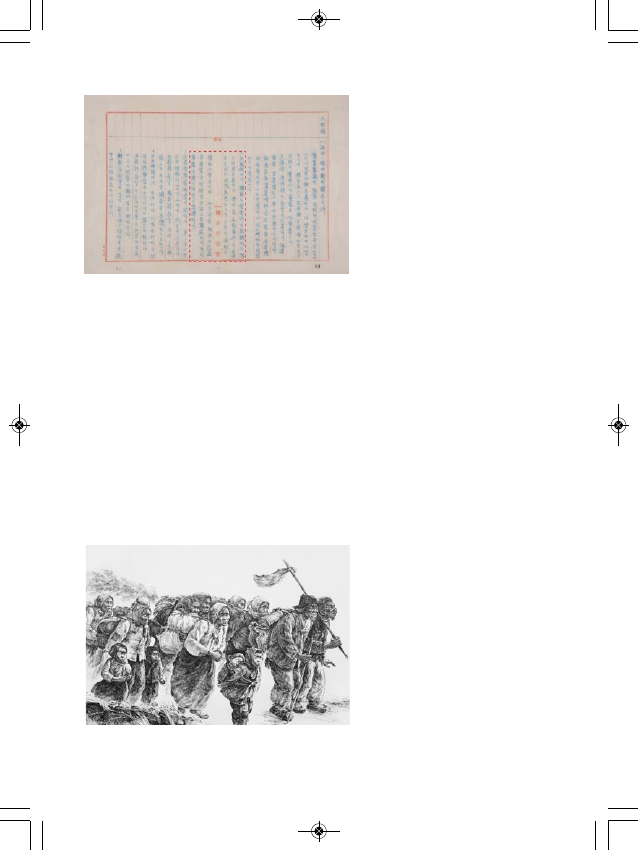
mountains and defect. Over 8,000 people came down from the mountains waving
a white flag made out of
pieces of their clothes
attached to tree branches.
Most were women, children,
and the elderly, with women
accounting for 51 percent.
However, Yu’s promise was
not kept. The punitive forces
rounded up those who came
down from the mountains in
the Jeju Agricultural School
34
Cabinet meeting proceedings documenting President Rhee
Syngman’s directive for a merciless crackdown.
Mountain Descenders Kang Yobae
한눈에 보는 4.3영문판본문(인쇄본).qxp_Layout 1 2022. 1. 20. 오후 9:01 페이지 34
35
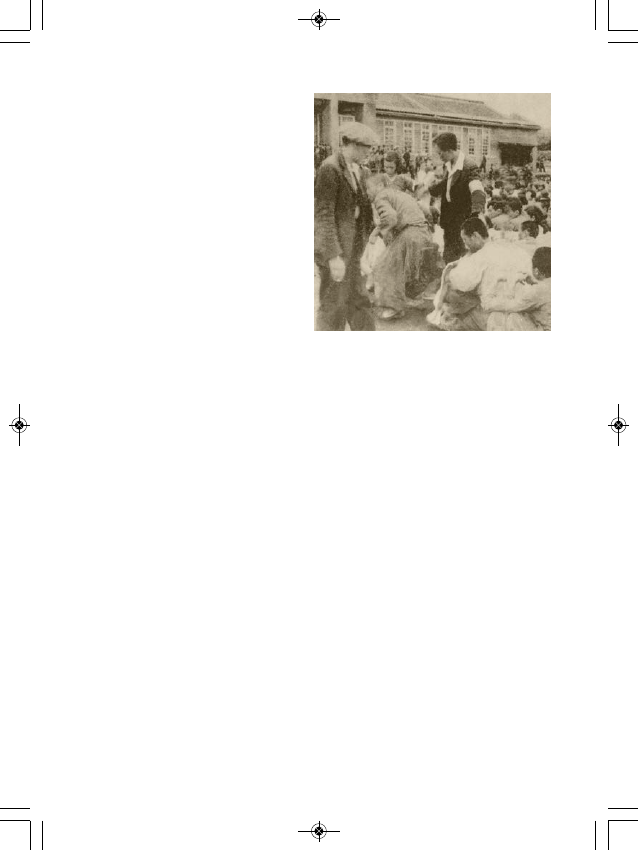
grounds and sorted out sympa-
thizers to guerrilla fighters. A total
of 1,660 people were tried by
courts-martial. The courts-martial
neither followed the minimal legal
procedures stipulated by law nor
provided written verdicts to
sentence them to death, life
imprisonment, or 15 years in
prison. Those who were sentenced
to death were shot at Jeju Airport,
and others were sent to prisons all
across the country since there were
no prisons on Jeju Island. The
number of people who were
sentenced by such illegal courts-
martial amounted to 2,530,
including those who were sentenced in December 1948.
Another Massacre Brought on by a War
Upon the outbreak of the Korean War on June 25, 1950, the Rhee Syngman
administration, helplessly driven southward by the North Korean forces, launched
a nationwide genocide campaign against prisoners and those in preventive custody.
The Jeju 4·3 prisoners who were jailed in mainland prisons were illegally
executed for being political offenders. The number of victims was estimated to be
no less than 3,000 including those tried in general courts.
Preventive custody refers to the detention of a person who is likely to commit
crime. It was established by Japan as a suppression measure in colonial Korea but
was abolished immediately after Korea’s liberation. However, when the Korean
War broke out, the Rhee Syngman administration carried out illegal preventive
detention on a large scale.
Hundreds of people under preventive custody in four police stations on Jeju
Island, including Jeju, Seogwipo, Moseulpo, and Seongsanpo, were all slaughtered
by the martial law command. The victims were killed and thrown into the ocean or
shot and secretly interred at Jeju Airport, and their corpses could not be found for
proper burial for their families.
The mass grave in Moseulpo, the Cemetery of Unnamed Victims, is also the
Search A right-wing youth group is questioning the resi-
dents who returned from hiding in the mountains and ferret-
ing out guerrilla sympathizers on the grounds of Jeju
Agricultural School.
한눈에 보는 4.3영문판본문(인쇄본).qxp_Layout 1 2022. 1. 20. 오후 9:01 페이지 35
36
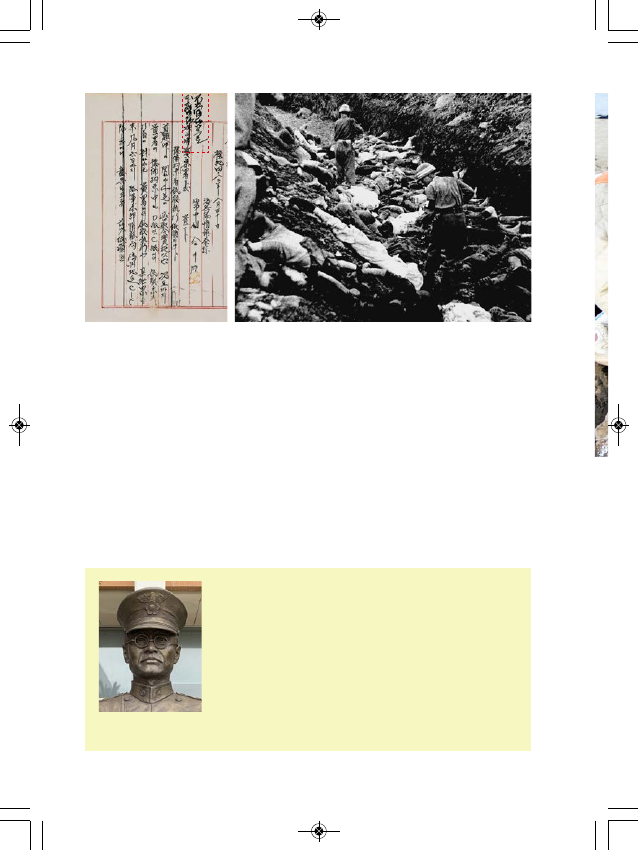
“The Golyeonggol Village Massacre” in which the inmates of Daejeon-
Prison were collectively executed.
mass burial site of the preventive detention victims. The officers of Moseulpo
Police Station shot them to death in the old ammunition storage in Seotal Oreum in
July and August 1950. Some of the bodies were secretly recovered by their
families, but 132 remained buried until 1956.
The victims’ families who received belated approval from the authorities set out
to recover the remains, but they were indistinguishable from one another. Instead
of trying to separate the remains, the families decided to leave them as is and put
up a monument engraved with the phrase: “Baekjo ilson jiji,” meaning “over a
hundred people died on the same day, at the same time, in the same place, and their
remains have become entangled into a mass, and therefore they are as good as one
Chief Mun Hyeong-sun, who saved preven-
tive detainees.
Mun Hyeong-sun, chief of Seongsanpo Police Station,
refused to carry out the mass killing order by confidently
writing “not executed due to injustice” on the written order
from the assistant chief of staff of the Marine Corps to
execute the preventive detainees in August 1950. In 2018,
Mun, who died alone without his family, was named the
“Police Hero of 2018” and a bust sculpture of him was
erected in his memory in front of the Jeju Provincial Police Agency building.
Refusal to carry out an unjust-
execution order.
한눈에 보는 4.3영문판본문(인쇄본).qxp_Layout 1 2022. 1. 20. 오후 9:01 페이지 36
37
despite their different ancestries.”
However, the situation at Seongsanpo Police Station was different. Chief Mun
Hyeong-sun, who had been a former member of the national independence army,
refused the martial law command’s order to execute those in preventive detention
and saved hundreds of lives.
Flowing Island- After effects and the Movement for
Truth
Unending Suffering, Tabooed History
The Jeju 4·3 Incident Investigation Report, a government report that was
finalized in 2003 under the Special Act, estimated the death toll in the Jeju 4·3
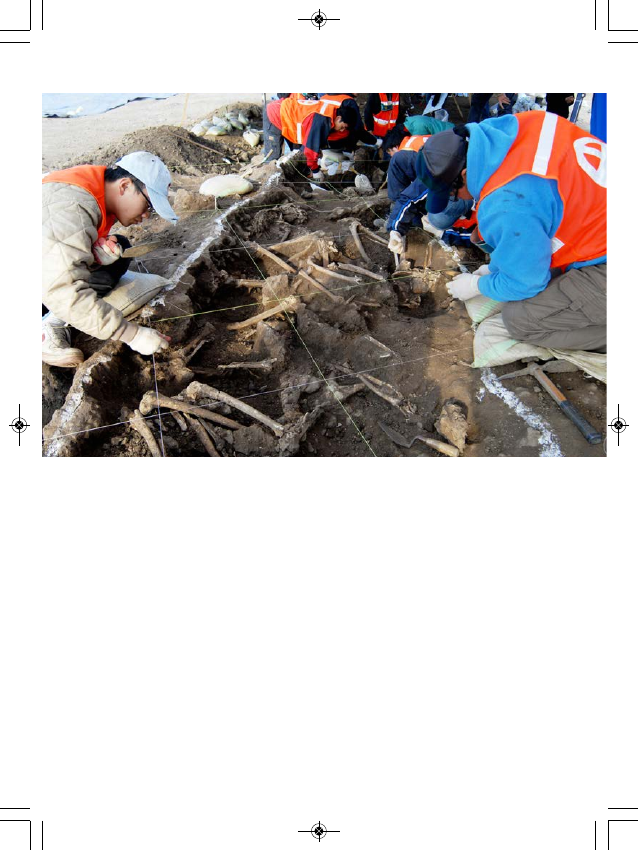
The excavation site at JejuAirport The remains of a total of 387 people have been discovered by therunway
since 2007.
한눈에 보는 4.3영문판본문(인쇄본).qxp_Layout 1 2022. 1. 20. 오후 9:01 페이지 37
38
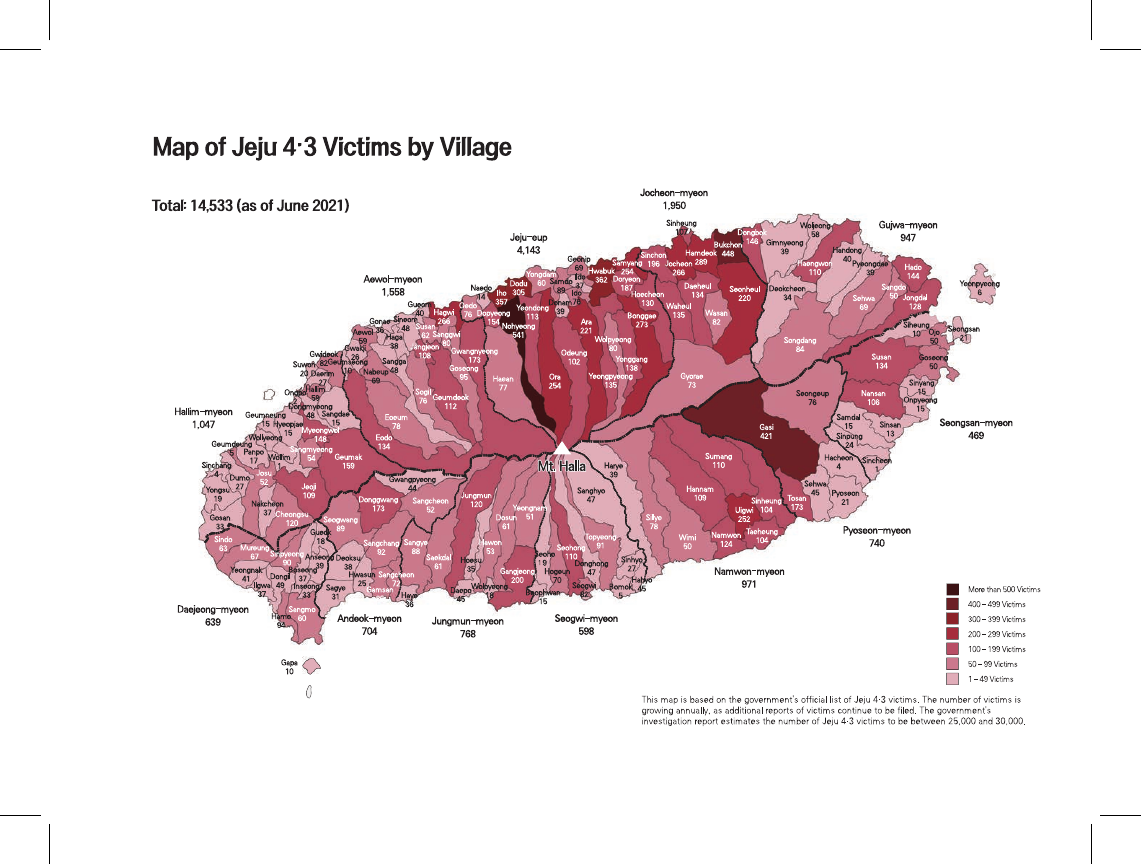
incident to be between 25,000 and 30,000. The Jeju 4·3 Committee headed by the
prime minister has been working on screening the victims. As of 2021, the number
of victims settled by the committee is 14,533. This figure will continue to increase
as the screening process progresses.
A notable point in the makeup of victims is that women account for 21.3 percent
of all victims; the elderly aged 61 or older accounts for 6.1 percent; and children
under 10 account for 5.8 percent. In total, these vulnerable victims account for over
33 percent of the total death toll. It is clear that there had been an excessive
crackdown on the people regardless of age or gender. The number includes those
victimized by the armed guerrillas.
The police lifted the standstill order on Mt. Halla on September 21, 1954. This
officially ended Jeju 4·3, which lasted for seven years and seven months after the
March 1 shootings in 1947. But the damage caused by Jeju 4·3 did not stop here.
All the wounds and pain of the incident were handed down to the people who
were left behind. The families of the victims went through an ordeal, as they were
treated guilty by association and fettered by the National Security Act. They
suffered physical and mental post-traumatic stress disorder from torture, as well as
the communist complex, and they had to endure the pain of their broken families
by themselves.
Tough Path of Finding
the Truth
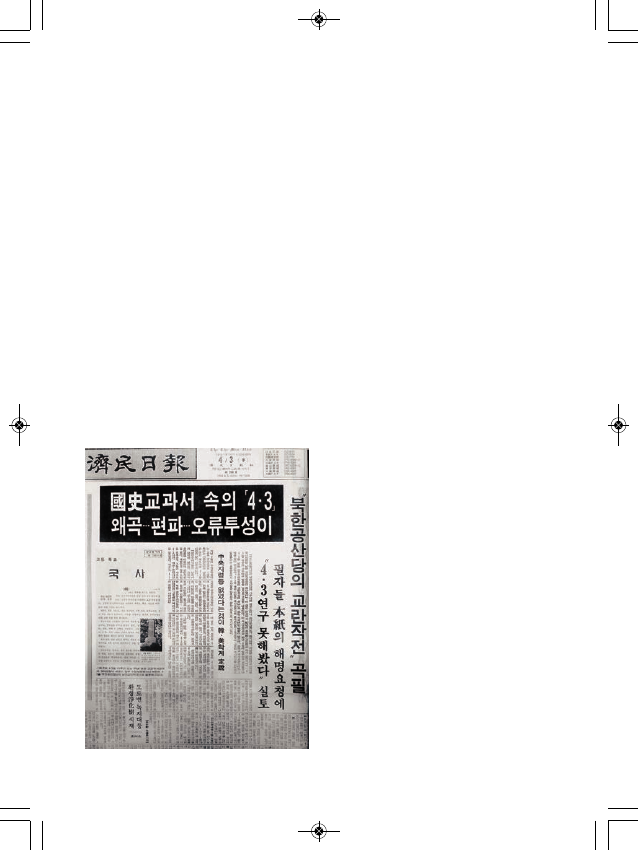
Jeju 4·3 has been trapped and
hidden for nearly half a century. Even
until the 1980s, Jeju 4·3 was de-
scribed as “riots abetted by the North
Korean Communist Party” in high
school textbooks. A tough journey lay
ahead of us to reach the truth that has
been distorted.
Shortly after the April 19 Revolu-
tion in 1960, the movement to
investigate the truth of Jeju 4·3
emerged, when a democratic
An article reporting on the fallacies about Jeju 4·3 in
Korean history textbooks Jemin Ilbo,April 3, 1991.
한눈에 보는 4.3영문판본문(인쇄본).qxp_Layout 1 2022. 1. 20. 오후 9:01 페이지 38
40
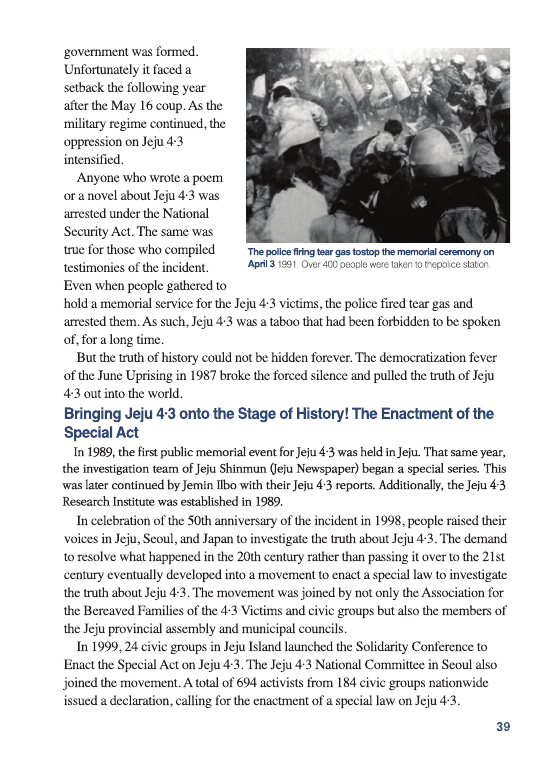
Owing to the excitement over the special law, the political community also set
out to legislate the special law on Jeju 4·3. On December 16, 1999, the Special Act
on Discovering the Truth of the Jeju 4·3 Incident and the Restoration of Honor of
Victims (hereinafter, the Special Act) passed the plenary session in the National
Assembly with mutual agreement between opposing parties. A foundation was laid
for the April 3rd falsely accused and trapped underground to finally come out on
the stage of history.
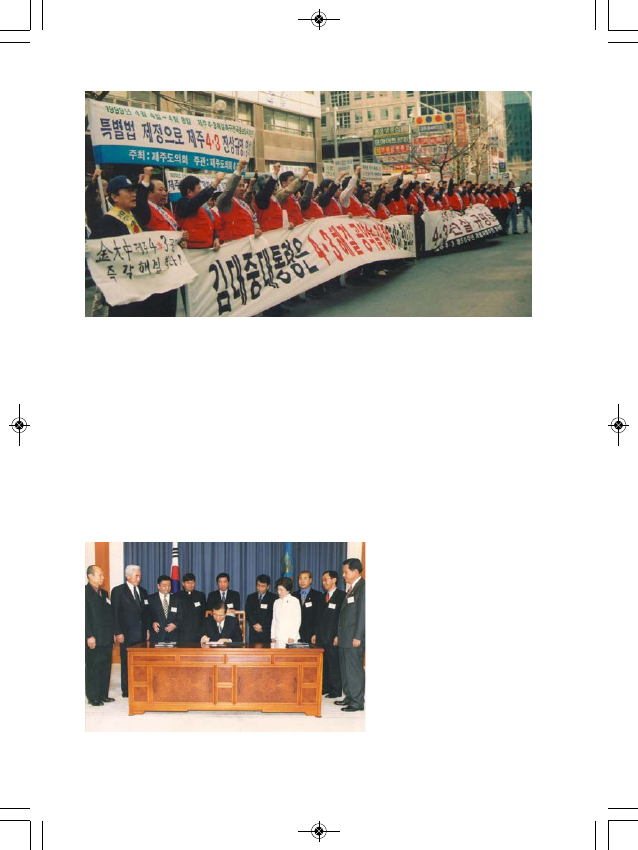
The Special Act was enacted on January 12, 2000, at the dawn of the 21st
century. On the eve of the promulgation of the Special Act, the signing of the
Special Act was held in Cheong Wa Dae, the Korean presidential residence, with
eight representatives of the
bereaved family associa-
tion and civic groups who
had been at the front of the
movement to investigate
the truth about Jeju 4·3.
President Kim Dae-jung
remarked, “The Special
Act will be a golden
milestone for society in
which human rights are
prioritized over any other
President Kim Dae-jung's signing ceremonyfor the Special Act
Protest calling for the enactmentof a special law (Seoul)
한눈에 보는 4.3영문판본문(인쇄본).qxp_Layout 1 2022. 1. 20. 오후 9:01 페이지 40
41
value and for the stream of democracy that will flow abundantly.”
Reborn as an Island of Peace
The President’s Apology and Designation of a National Memorial Day
TheJeju 4·3Incident Investigation Report, which defines the incident as a
violation of human rights by state power, was finalized on October 15, 2003. This
was the first statutory report that shed new light on a past event in modern Korean
history. The emphasis is put on “statutory report” as the investigation and the
writing of the report was carried out at the government level in compliance with
the Special Act.
After the report was finalized, a set of seven
proposals to the government were adopted. It
included follow-up measures, including a
government apology, the designation of a
memorial day, the use of relevant information in
educational materials, the creation of a peace park, living
expense support for victims and victims’ families, the
excavation of the remains, and support for additional
investigation and commemoration projects. The first
proposal that was realized was the government apology.
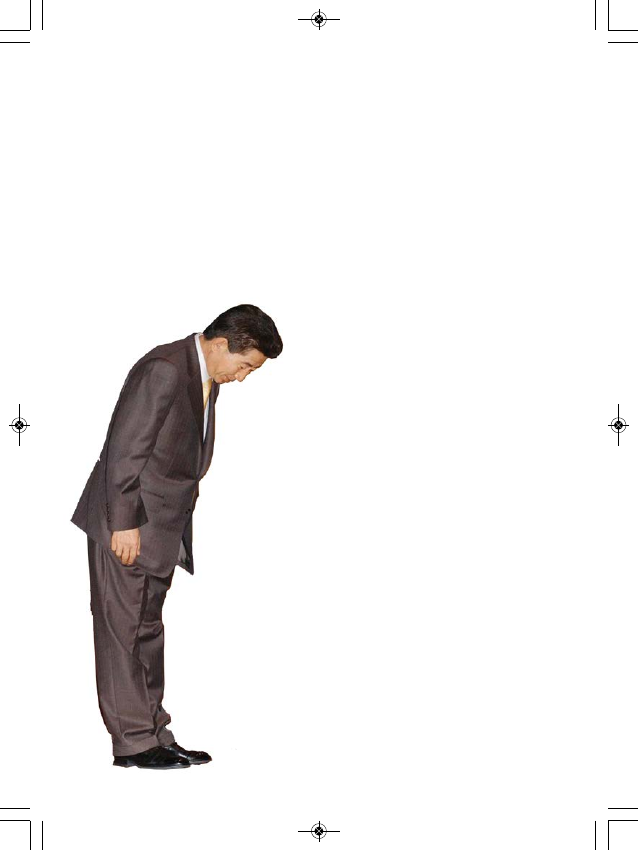
On October 31, President Roh Moo-hyun visited Jeju Island
and publicly apologized for the faults of the state to the
people of Jeju and the bereaved families of Jeju 4·3 victims
who have lived in the bondage of suffering for half a century.
“As the president in charge of state affairs, I sincerely
apologize and offer condolences to the victims’ families and
the people of Jeju who took the initiative to investigate the past
faults of the state. I would like to pay tribute to the innocent
victims and pray for the souls of the departed.”
On January 17, 2005, Jeju Island was declared “Island of
World Peace” by the Roh Moo-hyun administration. Jeju has
become a global symbol of peace and human rights, sublimat-
ing its tragic history of the 4·3 incident into the spirit of
한눈에 보는 4.3영문판본문(인쇄본).qxp_Layout 1 2022. 1. 20. 오후 9:01 페이지 41
42
reconciliation and coexistence. In 2014, a memorial day for the victims of Jeju 4·3
was officially declared a national day. It is particularly significant in that the
national day for Jeju 4·3, which acknowledges the faults of the state power, was
designated not by a progressive administration, but by the conservative Park Geun-
hye administration.
Reconciliation Campaign, a Model for Historical Settlement
With the president's apology and the declaration of “Island of World Peace,” Jeju
searched for new ways to resolve the issues of the 4·3 incident.
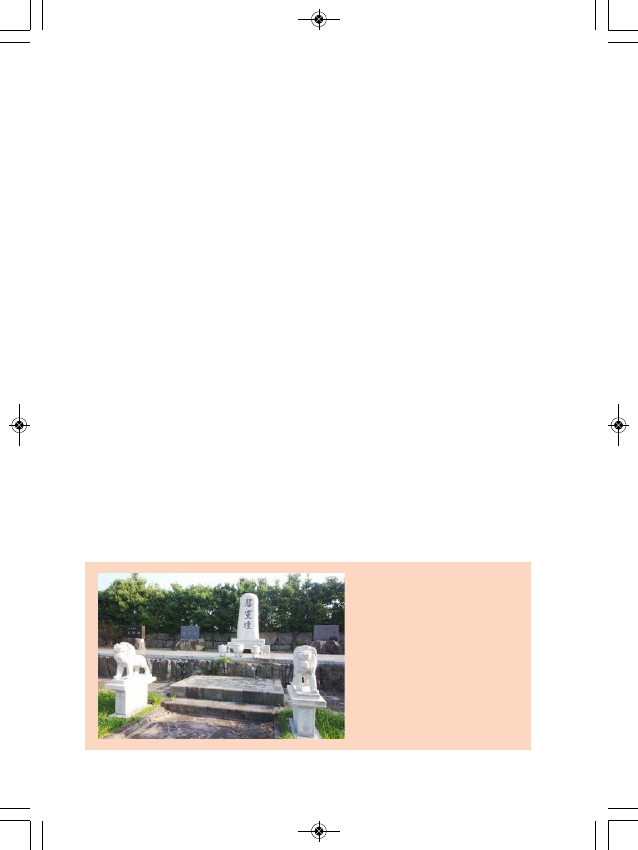
In 2003, the residents of Hagwi-ri, Aewol-eup, built a memorial altar called
Yeongmowon
(英募園). Monuments for patriotic martyrs, the war dead, and Jeju
4·3 victims were erected to pray for the police and soldiers together with the
victims in an attempt to seek reconciliation and coexistence.
The seeds of reconciliation, which had been scattered over a field of stone and in
the wilderness, began to take root and miraculously grow. The joint memorial altar
project spread to neighboring villages such as Sangga-ri, Jangjeon-ri, and Gwang-
nyeong-ri.
On August 2, 2013, the Association for the Bereaved Families of the 4·3 Victims
and the Jeju Veteran Police Association, who had been seriously at odds with each
other, announced the “Declaration of Reconciliation” for reconciliation and co-
existence. The representatives of the two groups stated in a press conference to
“abandon our ideological thinking and lead the unconditional reconciliation and
unity of the residents, in an attempt to heal the wounds of conflict of the past
years.”
The declaration of reconciliation was a touching tribute that was held annually.
Come and bow down. This stone
monument is set up by all to
forgive all, as all are victims. May
the deceased breathe their last
breath. For the living, hold your
hands together.
- From the inscription on Yeongmo-
won in Hagwi-ri
한눈에 보는 4.3영문판본문(인쇄본).qxp_Layout 1 2022. 1. 20. 오후 9:01 페이지 42
43
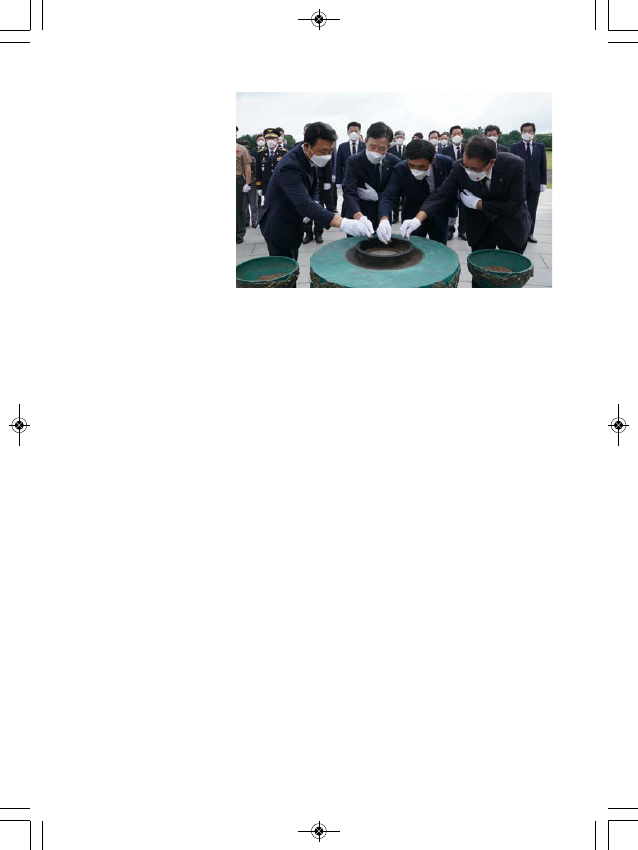
On August 2, both
associations also
paid visits to
memorial sites
together, visiting the
national cemetery,
where the fallen
heroes are buried,
and the Jeju 4·3
Peace Park, where
the victims’
memorial tablets are
enshrined.
The joint visit was
particularly meaningful, as it was attended by the two groups’ executives as well as
the heads of public institutions in Jeju, politicians from both the ruling and
opposition parties, and officials from civic organizations. In 2021, the leaders of
the Jeju local military forces and the police came to pay their respects. With this,
Jeju Island was hailed for uniting conservatives and progressives, the ruling party
and the opposition, and people and the government, for the sake of healing the
trauma of Jeju 4·3.
Justice Moving Forward! The Enactmentof the Special Act
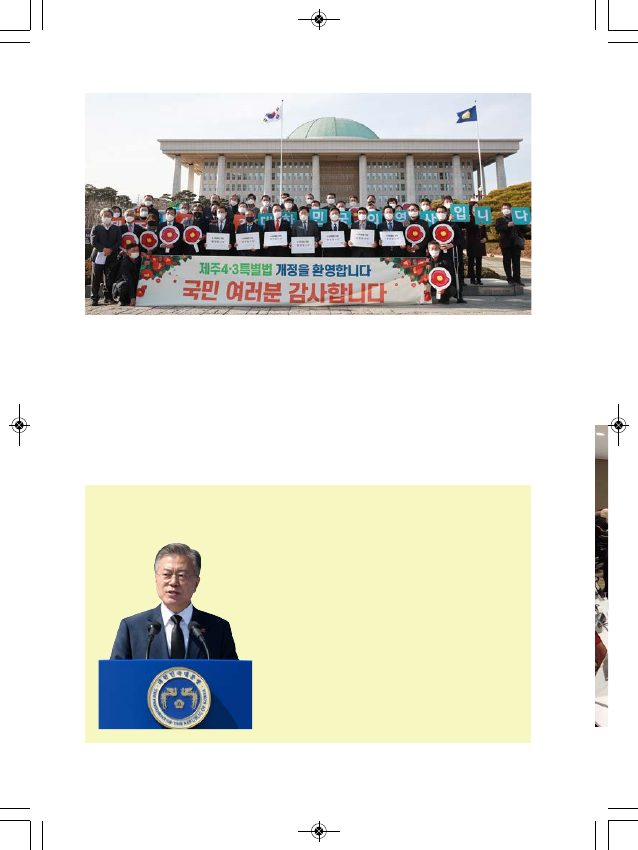
On February 26, 2021, an amendment bill to the Special Act passed the plenary
session of the National Assembly with the agreement of the ruling and opposition
parties. It had been 21 years since the Special Law on April 3 was enacted. The
amendment bill was highlighted because it included provisions for government
reparations and compensation for the victims as well as ex officio retrials for the
restoration of honor of the victims of unlawful courts-martial. President Moon Jae-
in's aggressive call for a solution has been effective.
President Moon attended the 4·3 victims’ memorial ceremony three times in
2018, 2020 and 2021, setting a record of a sitting president’s attendance at the
memorial services. Moon quoted Martin Luther King, “Justice delayed is justice
denied,” and urged the political community to revise the Special Act.
The revised Special Act also included the resumption of additional investiga-
tions by the government committee, special cases for declaring missing victims,
the reorganization of the family relationship register, and support for the treatment
The leaders of the bereaved families association and the Korea Veteran Po-
lice Association are participating in the joint memorial service in 2021, at-
tended by thee heads of the police and the military.
한눈에 보는 4.3영문판본문(인쇄본).qxp_Layout 1 2022. 1. 20. 오후 9:01 페이지 43
44
of patients dealing with traumatic stress following Jeju 4·3. This set Jeju 4·3 as a
model for the government’s settlement of the past, which began with investigations
and leading to reparations and compensation for the victims.
The Remaining Story
Has Jeju 4·3 been fully resolved? No. In fact, many questions still remain. Even
Celebration of the revision ofthe Special Act held in the front yard of the National Assembly, Feb. 26, 2021.
“Investigating the truth about Jeju 4·3 is to reflect
on the unfortunate past that transcends regional
boundary and to restore the universal value of
humanity. The restoration of the honor of Jeju 4·3
is our future toward reconciliation, coexistence,
peace, and human rights. Jeju has been voicing
for the value of peace and human rights for the
past 70 years, despite the deep wounds it
continues to bear. Now such value will lead to
peace and co-existence on the Korean Peninsula
and will be passed on as a message of peace to
all mankind. The desire for eternal peace and
human rights will never die.”
- From the address delivered at the 70th anniversary of Jeju
4·3 memorial service in 2018
.
한눈에 보는 4.3영문판본문(인쇄본).qxp_Layout 1 2022. 1. 20. 오후 9:01 페이지 44
45
if it was a tragedy caused by the division of the Korean Peninsula and the Cold
War between the East and the West, we still cannot help but ask, “How could so
many people have been killed?” It is even more incomprehensible that unarmed
civilians, especially children, the elderly, and women, were brutally murdered.
According to the US military report, in April 1949, the number of punitive
forces stationed in Jeju was tallied at 2,622 for Korean military, 1,700 for the
police, and 50,000 for the police reserves. By that time, the armed guerrillas were
estimated to be less than 100, but USAMGIK, the Korean government, and the US
military advisory group dragged out the situation until 1954, failing to resolve it
early despite a huge input of forces. Jeju 4·3 paradoxically demonstrates what
happens when an incident is dealt with only through physical power and framed as
an ideological conflict between the left and right, while completely ignoring the
history, tradition, and public sentiment. It is a painful lesson not only in the case of
Jeju 4·3 but also in many conflict areas around the world that incidents like Jeju 4·3
cannot be easily overcome with enormous strength when the governing body fails
to win the hearts of the people.
The Korean government has apologized for the damage caused during Jeju 4·3
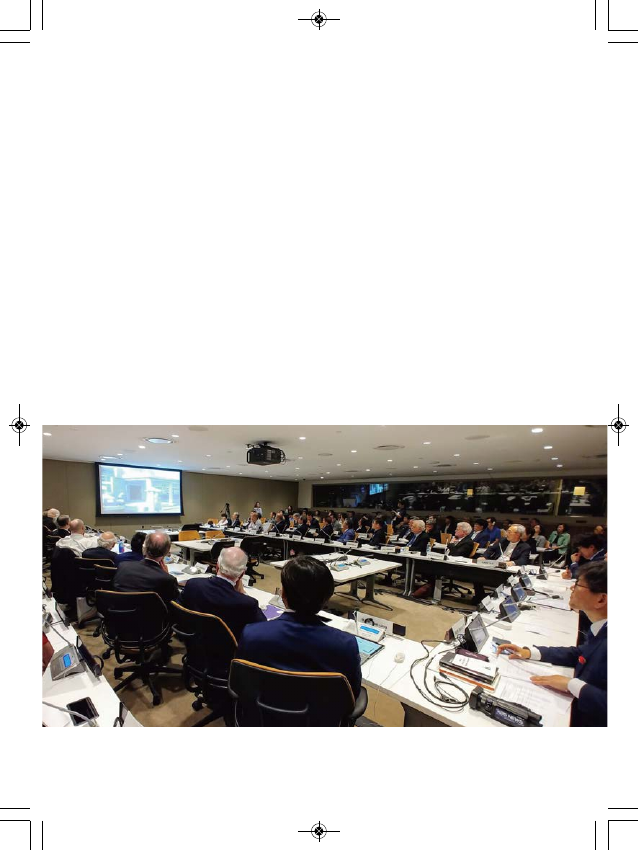
The UN Symposium on Human Rightsand Jeju 4·3 heldon June 20, 2019
한눈에 보는 4.3영문판본문(인쇄본).qxp_Layout 1 2022. 1. 20. 오후 9:01 페이지 45
46
four times, twice by former President Roh Moo-
hyun and twice by President Moon Jae-in. The
restoration of the honor of the victims, including
the reparations and compensation, is also under
way.
Then what is the position of the United States,
one of the main perpetrators? They are still
keeping their silence on this issue.
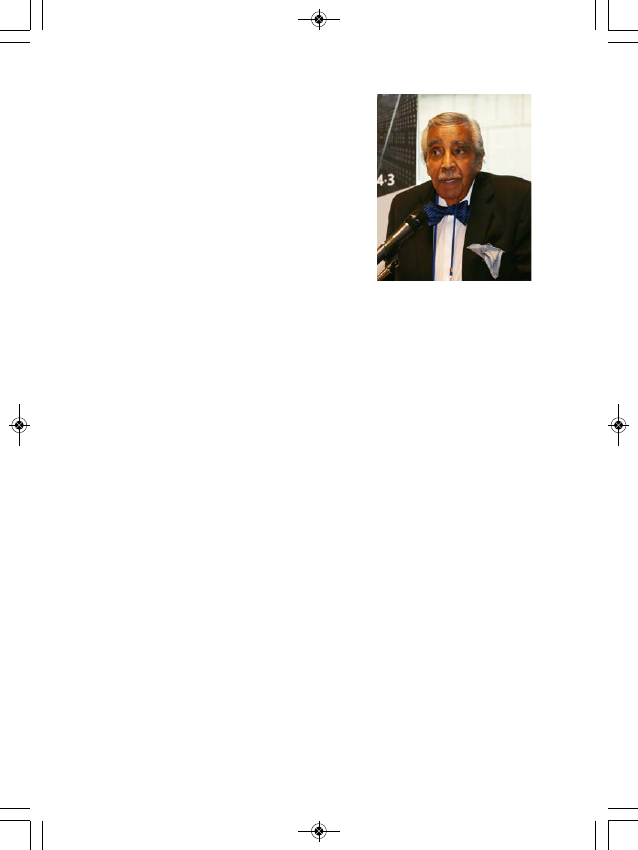
The UN Symposium on Human Rights and Jeju
4·3 was held at the UN Headquarters in New York
on June 20, 2019. On that day, the speech by
former US Representative Charles Rangel had a
special resonance. A 90-year-old veteran politician,
Rangel was a Korean War veteran and a legendary
politician who was elected to the House of Representatives for a total of 23 times
in New York (46 years in office).
“The ROK-US alliance has grown strong over the years. However, in order to
strengthen this, the past issues such as Jeju 4·3 should be solved in a sincere
way.”
Jeju 4·3 is calling upon the US for responsible action, not as an obsession with
the past. Rather, it is to reflect on the unfortunate past and move on to the future.
Charles Rangel, former US represen-
tative
한눈에 보는 4.3영문판본문(인쇄본).qxp_Layout 1 2022. 1. 20. 오후 9:01 페이지 46
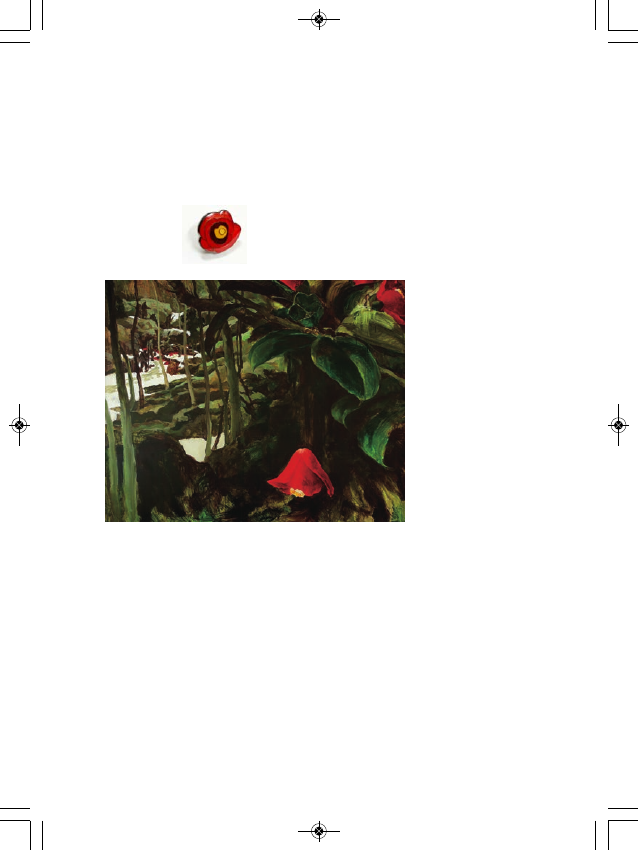
Dongbaek (camellia) is a flower
that blooms in cold winter. Dong
(
冬) in the Korean name of the
flower means winter. Its vibrant red
petals symbolize the tenacious life
force, as the flower bursts into
bloom alone in cold winter when
everything else is asleep. But
when it’s time for them to fall,
dongbaek flowers abruptly fall off
as a whole on snowy white fields.
Dongbaek began to symbolize
Jeju 4·3 after it appeared in the
paintings of Kang Yobae, includ-
ing the series on Jeju 4·3 titled
“Dongbaek Flowers Fall: Jeju
People’s Resistance.” The titular
artwork captures the moment of a
dongbaek flower falling in the fore-
ground, with a group of punitive
forces, a man wielding an ax, and
a spatter of red blood on the snowy white field in the background. The artist used dong-
baek flowers to represent the people of Jeju who were sacrificed at the time. Camellia has
since become the symbol of Jeju 4·3.
Why did dongbaek (camellia) become the symbolic flower of Jeju 4·3?
한눈에 보는 4.3영문판본문(인쇄본).qxp_Layout 1 2022. 1. 20. 오후 9:01 페이지 47
1st Edition, 1st print, October 2021
Publisher Jeju 4·3Peace Foundation
Address 63313, 430, Myeonglim-ro, Jeju 4·3Peace Memorial Phone 064.723.4350 Fax 064.723.4303
E-mail peace@jeju43peace.or.kr Korean Website jeju43peace.or.kr English Website jeju43peace.org
Editing Design and Publishing Corporation
GAK (064.725.4410)
Not for sale
Handbook for
The Jeju 4·3 Peace Memorial Hall
한눈에 보는 4.3영문판본문(인쇄본).qxp_Layout 1 2022. 1. 20. 오후 9:01 페이지 48
영문4.3희생자마을별분포지도(인쇄용).pdf 1 2022. 1. 20. 오후 5:25
한눈에 보는 4.3 연문본 표지&에폭시판.pdf 1 2022. 1. 20. 오후 9:10
